Norway
 Sweden
 Finland
 United Kingdom
 Denmark
 United States
For the most part, the success of digital transformation in arts organisations hinges on how cultural resistance is handled. If it’s sidelined in favour of technical change management, system adoption often suffers. We explore practical actions to reduce reluctance during digital transformations.

In any transformation, “there can be a sense among employees that change is happening to them rather than by or for them”. [1] And nowhere is this more true than during transformations that overhaul familiar processes and rewrite business-as-usual (BAU).
According to industry research, approximately 81-91% of Chief Financial Officers (CFOs) and Chief Information Officers (CIOs) plan to invest in new technologies to increase digital efficiency over the next year. [2] For arts and culture organisations, efficiency is key, not only for streamlining financial processes but also for ensuring proper allocation of funds to projects, exhibitions, and marketing.
It’s clear then, that the role of CFOs in arts and culture organisations is critical for fostering positive cultural change. We explore how CFOs and other senior leaders can create productive work environments that tackle cultural resistance to digital modernisation with empathy, allowing arts and culture finance teams to approach modern technology with confidence.
Keep reading to discover:
- Different cultural obstacles to change in arts organisations, including the threat of job loss and funding issues
- The steps CFOs can take to manage change effectively, including practising transparent communication, providing training, and leading by example
Are you a finance or digital transformation leader in the arts and culture industry? Is your organisation reliant on an outdated legacy finance system? Visit our market page or get in touch with our dedicated team members to learn how Xledger can improve your organisation’s financial control.
Cultural obstacles to change in arts organisations
It’s a common misconception that blockers to legacy system migration are technical. This isn’t always the case, particularly in arts and culture organisations where a small finance function controls complex funding and finances.
More typically, the main blockers to transformation come from cultural resistance and concern around financial process overhaul. Some of these blockers present as a reluctance to change, but more often than not, they are due to miscommunication and fear of the unknown.
The threat of job loss
The purpose of digital transformation is to strengthen efficiency, which means eliminating time-consuming administrative tasks. However, finance staff who are responsible for lengthy manual processes, such as accounts payable and expense management, may feel that digital transformation and the automation that comes with it will replace them.
“Don’t fix what isn’t broken”
Perceived safety is another common blocker to digital transformation. Understandably, replacing a familiar piece of technology feels risky and disruptive, but finance teams can sometimes mistake familiarity for suitability.
Capacity restraints
Conversations about digital transformation are often triggered when technology providers remove support for legacy products. At this point, finance teams must factor in a large-scale project into their schedules, while simultaneously tracking and managing funds, and providing insight into business-wide data. With these capacity restraints, arts finance teams may already feel overworked, undervalued, and resistant to a finance project that is thrust upon them.
Funding issues
Like many not-for-profits, arts and culture organisations with a charitable arm often rely on funding from local authorities, grants, or donors to operate. For finance teams, this means diligently tracking funds, allocating them to the correct projects, and communicating the fund balance to senior leadership.
However, problems arise when organisations lack unrestricted funds, or restricted funds are too narrow to use on the desired technological change. As a result, legacy system transformation may be sidelined so the business can focus funds on other areas, such as projects, initiatives, or building renovations.


“On top of providing us with a system that could support us with our core accounting needs, Xledger’s vast array of features has provided our team with highly customisable reporting capabilities as well as the ability to be compliant with our SORP reporting.”
Thalvin Punit Chauhan, Head of Finance and Business Planning
The Roundhouse
Steps to overcoming cultural obstacles
Tackling cultural resistance is difficult. We’ve outlined 3 stages of embedding change that finance leaders who want to ensure their team engage with digital transformation, technically and culturally, can use.
Secure pre-implementation buy-in
Digital transformation projects often fail because users have not culturally bought into the change. Unfortunately, no matter how efficient a system is, without staff buy-in, it’s not likely to be adopted or used optimally.
In arts and culture organisations, finance teams are generally already stretched; allocating time to understand where resistance exists, why it exists, and how to overcome it can turn the tables and help ensure the project is successful.
Step one: Diagnose areas of resistance
Before engaging staff and ensuring staff buy into digital transformation, finance leaders should diagnose areas of resistance within their organisation. By doing this, finance leaders can focus on those areas, reasons, and people, providing support to help them come to terms with the change.
Resistance areas may change throughout the project, so it’s worth keeping this at the front of mind and reviewing how attitudes have changed at regular project intervals. A few areas of concern might be:
- Long-standing staff members who have built extensive manual processes in the legacy system and don’t feel as though these processes need fixing
- Long-standing staff members who were involved in the legacy system implementation and are resistant to switching systems
- Newer staff members who have just learned processes and workarounds for the current legacy system and are reluctant to re-learn processes.
Whatever the reason a staff member is resistant to change, it’s important to approach the issue with empathy and time, as these are key to building trusting, respectful, and transparent working relationships.
Step two: Practice transparent communication
Most leaders understand that communication is key to the success of any project; however, the style of communication also plays an important role. During the project and post go-live, there will almost certainly be differing opinions. But by managing expectations through authentic communication, you’ll get to the right outcome.
Step three: Outline reasons for the project
Outlining the reasons for legacy system migration is arguably the most important step in gaining user trust and buy-in. Arming staff with clarity about the project will help them form opinions and create a welcoming atmosphere that encourages honest, constructive feedback.
Promote change during the project
During the project, change management helps control expectations and limit scope creep. Finance leaders who embody change act as role models for other staff members to follow their behaviours and support change. Through proper scope alignment and managed expectations, finance leaders can promote cultural change as a beneficial, rather than harmful, impact on BAU.
Step four: Create champions of change
Projects are most successful when respected team members become internal influencers, championing the change that the project brings. When finance leaders or senior leadership aren’t present in formal meetings or informal conversations, these champions act as the voice of a project.
However, change champions can only succeed if their role is outlined clearly. Those who understand how to give feedback, communicate change, model new behaviours, and support peers are more likely to advocate for change successfully.
When creating champions of change, remember to:
- Outline roles and responsibilities clearly
- Choose champions from different areas of the business
- Create feedback mechanisms to aid communication
- Provide training resources, such as early testing, project scope documentation, and the benefits of change on individual and business-wide processes
Step five: Conduct regular reviews
Hosting regular reviews is key to project momentum. Not only does it create sessions where teams can listen to feedback from other staff members and offer counterpoints or guidance, but it also ensures that the project is a business-wide initiative.
Regular reviews also create opportunities for the project team and senior leaders to assess staff buy-in levels. By gathering the whole business, finance leaders can see firsthand how other teams are reacting to change and how their change champions and finance team acknowledge these reactions. Listening to opinions in this way also helps to inform post-implementation plans.
Step six: Provide training
Training is essential, and finance leaders who understand how their team learns are better positioned to help them learn new processes quickly and easily. For example, are there members in your finance team who prefer scenario-based training? Or, are face-to-face sessions more fitting?
Understanding how your team learns and capitalising on that method boosts confidence in processes and, consequently, reduces resistance to change.
Maintain post-implementation engagement
The project doesn’t finish when the system goes live. Post go-live delivery is equally important for identifying where the configuration should be tweaked. This time allows users to settle into the new system, get to grips with the live environment, and provide feedback on any issues or impacts that are key to continuous learning.
Step seven: Reward new behaviours
After the project is complete, your champions of change may be tasked with other projects, and celebration or feedback may slip. However, celebrating positive impact and behaviour, no matter how big or small, helps to drive system adoption when the project is no longer underway.
Simple ways you can reward new behaviours:
- Shoutouts on internal communications platforms (Teams chats and channels, emails, intranet posts)
- Acknowledgements in business-wide quarterly review meetings
- Staff recognition on noticeboards (Winner of the week-style bulletins)
Recognising that change is hard is also an effective way to reward new behaviours. A quick thank-you as you walk through the office or notifying a manager of good work goes a long way in embedding change.
Step eight: Encourage feedback
Maintain open and welcoming conversations, particularly around how people feel, how processes affect workload and mental well-being.
Much like in-project reviews, informal post-implementation reviews also help to maintain long-term user engagement. The welcoming and transparent environment created during implementation can easily be dispersed, unless finance leaders work hard to continue authenticity.
For example, if there are aspects of the system that aren’t working optimally for a few team members, consider opening the conversation to the wider business — you may find the issue is present across different teams.
Step nine: Continue system development
Believing that the system is ‘finished’ after going live increases the risk of stagnation. It can be easy to take a step back and assume that your work is done after implementation. However, post-implementation engagement is crucial to long-term system adoption, efficiency, and staff confidence.
Instead, conducting quarterly or mid-year reviews that focus on how the system is working in BAU can help to identify new resistance areas, differing processes, and areas of further configuration.
Although these reviews primarily focus on the technicality of the system, here are a few questions to bring to sessions that highlight cultural resistance and areas for change:
- How confident do you feel using the new finance system in your day-to-day tasks, such as fund tracking, project accounting, and donor management? And what would increase that confidence?
- What has changed most in how you approach your work since go-live? Has it complicated how you support exhibitions, programmes, or productions?
- Has the new system changed your workload or stress levels at month-end, year-end, or season launches? If so, how?
- Do you feel you received enough support and communication throughout the project and after go-live? What would have helped more?
- Do you feel involved in shaping how the system is used going forward?
Take control of cultural resistance
At some point, every person will find themselves resisting change. Arts and culture CFOs who approach resistance with empathy and authentic communication will be better positioned to create and maintain staff buy-in throughout the project and into the long-term.
To discuss how Xledger’s expert consultants and project managers can support your organisation through finance transformation and cultural change, book your free demo today.
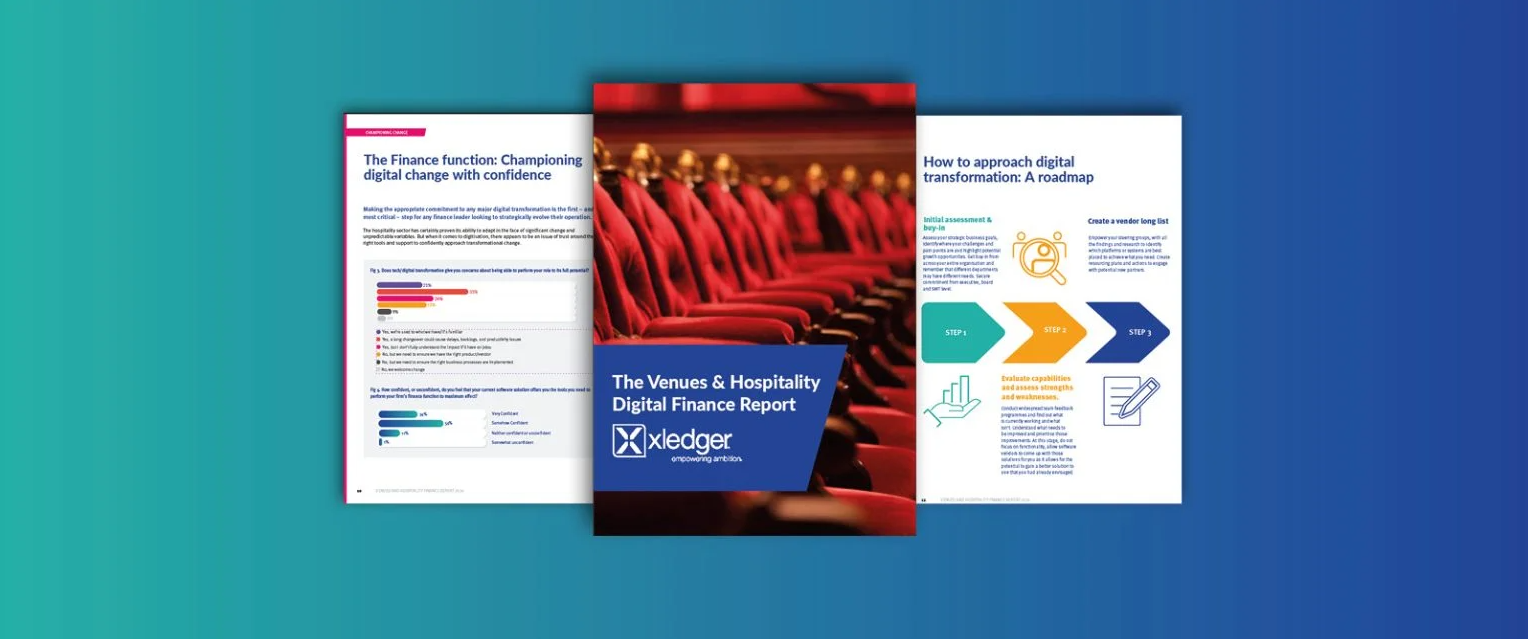
Guide
The Venues and Hospitality Digital Finance Report
Key points:
- What’s holding the sector back from completing its full digital transformation journey?
- How to effectively approach a digital transformation project and where to start
- How finance leaders can strategically evolve their organisation with future focus

News
Xledger x Tessitura announce game-changing software integration for the Arts & Culture Sector
We’re delighted to announce our latest native integration offering, which supports the arts, venues, and hospitality sector through our new partnership with Tessitura.
Guide
Moving Beyond Legacy Systems: Future-Proofing Finance
Download our guide to discover:
- Why legacy systems hold organisations back and how they limit growth
- The risk of poor data and outdated processes and the impact on decision‑making
- How cloud migration transforms finance, enabling real‑time insight and agility
- and much more…
Get in touch
Have any questions on Xledger’s finance software?
Get in touch with one of our dedicated team.
Contact person