Norway
 Sweden
 Finland
 United Kingdom
 Denmark
 United States
Environmental, Social, and Governance (ESG) reporting has become a permanent feature in financial reporting. But for many organisations, the way ESG data is gathered hasn’t fundamentally changed. Pressure from boards, stakeholders and operational teams who want more insight is growing, and finance teams are looking to modern technology to support this extra reporting burden.

Ben Stone, Product Manager at Xledger UK, walked our customers through reporting on Environmental, Social, and Governance (ESG) in Xledger. Providing insights into Xledger’s functionality, Ben discussed the difficulties of Excel-based reporting and Xledger’s roadmap for future carbon accounting.

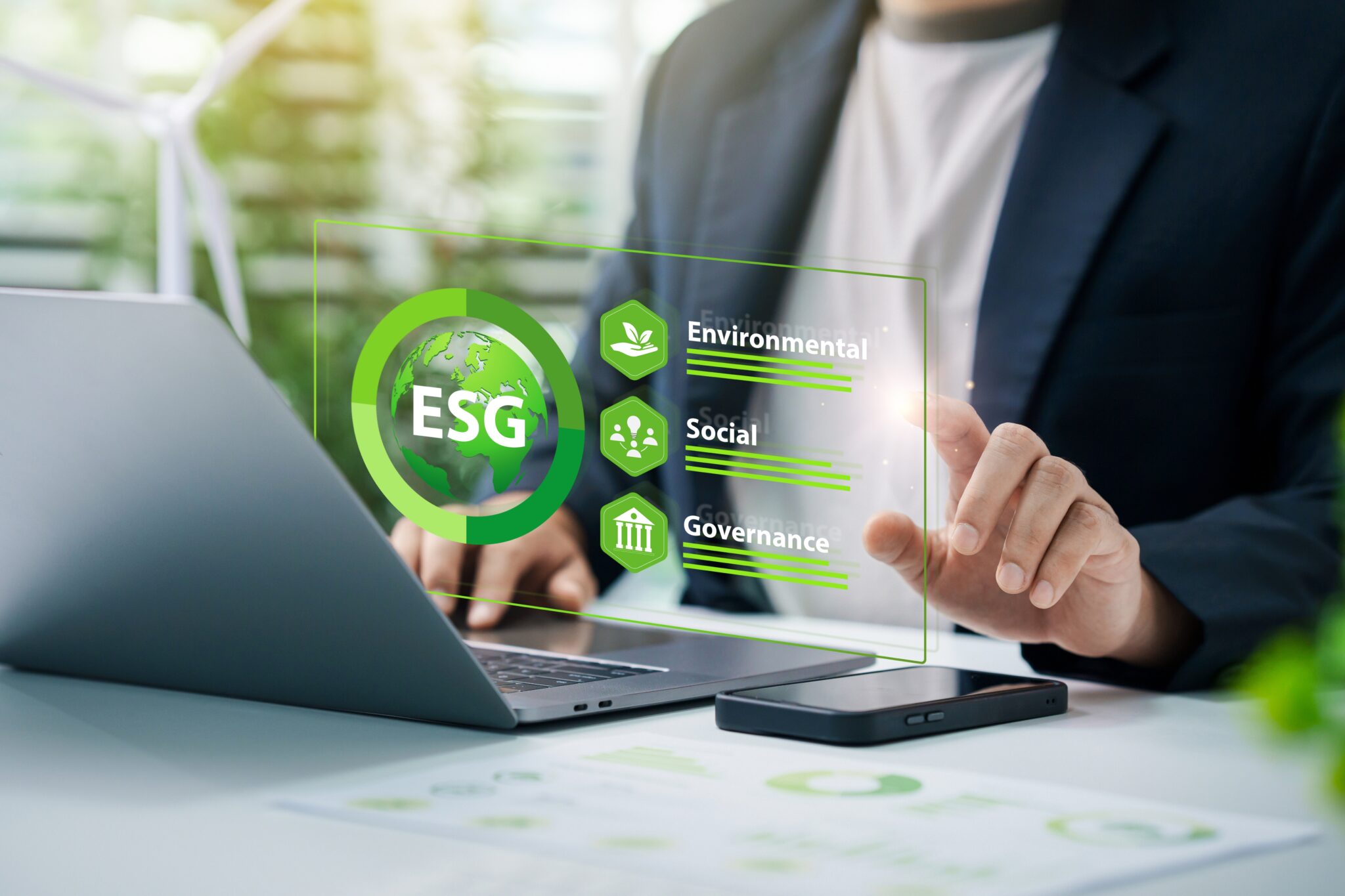
Want to see how Xledger handles ESG reporting?
Watch the in-system sneak peek here.

For many organisations, ESG reporting still happens once a year, often offline, feeling disconnected from day-to-day decision-making. Unpacking the current approach to ESG, Ben highlighted that “a lot of people are doing large data exports in Excel. It’s a once-a-year reporting exercise where finance teams are just ticking a box rather than actually getting the information and understanding on a regular basis how their ESG reporting is going.”
The difficulty is that this type of tick-box reporting is technically compliant with disclosure requirements, but it offers little insight into the narrative of how an organisation is really performing day-to-day. And narrative reporting is expected to become more important to regulators in the years ahead.
So, why does ESG reporting often end up in spreadsheets?
Spreadsheets remain the default tool for ESG reporting because they are accessible and, for the most part, flexible. Finance teams can tweak emissions factors, adjust formulas, and update assumptions without waiting for system changes. But this flexibility also brings risks.
When ESG reporting relies on spreadsheets:
- Knowledge often sits with selected individuals, creating dependency on the key individual.
- Calculation logic embedded into formulas that aren’t easy to audit or to hand over.
- Updates are time-consuming, so reporting tends to happen annually, rather than continuously.
- The ESG always sits outside of an organisation’s core finance systems, leading to siloed and out-of-date insights.
This approach also limits the amount of context finance teams can add to the data, preventing finance from creating a whole ESG narrative that auditors are beginning to demand.
Financial data is the foundational ESG insight
One of the most practical shifts organisations can make is to think of ESG and finance as simultaneous objectives. Ben noted that cost-based reporting is easier to manipulate in spreadsheets – but it rarely provides tangible, live information.
“A lot of people are doing cost-based ESG calculations. When they invest in a core finance system, the benefit is that their data is already in the system. There’s no more waiting for an export to an Excel document. Finance and the wider business get a real idea of how their climate reporting is going without having to wait till the end of the year.”
In practice, this means that finance gains access to ESG reporting that:
- Refreshes frequently without additional manual effort
- Reflects current activity rather than historical trends
- Supports early intervention when trends start to shift
By working directly from live financial data, ESG calculations update alongside day-to-day transactions, allowing finance teams to move away from ESG snapshots produced at a manic year-end towards continuous monitoring.
The need for context in ESG reporting
Aligning ESG and finance data into a single system ensures that both departments work from the same source of truth. Instead of relying on siloed spreadsheets, ESG data can be analysed using the same dimensions used by finance.
Consequently, finance teams can answer more meaningful questions, such as “Which projects contribute most to emissions growth?” and “How do different departments compare against the organisation’s climate target?”
With a single source of truth available, ESG reporting becomes less about producing a single figure and more about understanding emission trends. With this context, finance and ESG teams can build a clear narrative for their ESG reports, ensuring that improvements and obstacles are acknowledged in equal measure.
Starting with cost-based ESG reporting
Quantity-based ESG reporting is widely recognised as more accurate than cost-based reporting, particularly for climate disclosures. However, it is extremely difficult to capture quantity-based data (kilowatt hours or fuel usage) reliably, often leading to bad or inaccurate information.
During the discussion, Ben emphasised that, for Xlegder, cost-based reporting is just the starting point. “Today, we’re very cost-based in our calculations. It’s an exciting starting point, and one that makes sense, because we’re a finance system and a lot of our information is around cost.”
For many organisations, this method allows finance teams to begin reporting on ESG without waiting for perfect data to be captured from day one. Cost-based decreases manual workload and spreadsheet risk, while empowering organisations with a real-time view of their emissions.


Article
Charities: Fund Reporting from Your Finance System
Many charity finance professionals share a common problem: the ability to complete their annual accounts without resorting to the cumbersome task of manually analysing transactions offline in a spreadsheet.

How can you make ESG calculations auditable?
While providing a short in-system preview of how Xledger handles cost-based ESG reporting, Ben outlined a few ways that finance teams can ensure their calculations are auditable.
As ESG reporting faces scrutiny, it’s important to prioritise transparency as well as accuracy. At a high level, ESG calculations are driven by:
- Emissions elements – the categories being reported on
- Filters – which financial data is included
- Factors – the rates used to calculate CO2 equivalents
“It’s helpful to know how the data travels from financial into climate reporting,” Ben noted, “as this understanding helps teams maintain accuracy, transparency and, ultimately, high compliance and audit standards.”
Beginning the ESG journey
To wrap up the session, Ben doubled down on the impact of continuous reporting growth. “At Xlegder, we understand that ESG capabilities are not a finished product. We’re continuously working on it to ensure it meets EU and UK standards, and the more feedback we get from our customers, the more we can drive development based on what our customers need.”
As regulations evolve, finance teams will face the challenge of building an ESG reporting process that can adapt to compliance changes. Get in touch with our experts to learn more about Xledger’s leading ESG functionality.
Article
Staying Compliant: What is ESG and Why Do We Need It?
ESG is a corporate sustainability concept that identifies a company’s impact on the environment and society. It’s fast becoming a major buzzword in accounting and finance circles as it aims to capture a business’s measures on climate, diversity, equality, and inclusion.
Guide
Series: The CFO’s Guide to…
On average businesses stay with the same finance software for 5-7 years, so the pressure is on to get it right when looking to change or invest in new finance software. In this series of guides, we dive into 5 key areas CFOs and finance teams should be clued up on when looking to change accounting systems. We hope you enjoy.

Webinar
The next 12 months in UK accountancy tech: AI, bank integrations, and other key trends
Welcome to Xledger’s CPD-Certified webinar.
In 40 minutes, experts from Xledger and S&W share real-world perspectives on technology adoption and the challenges and opportunities facing the UK accountancy tech landscape, focusing on practical impact to cut through the hype.
You’ll learn where technology is already delivering value, where expectations may need resetting, and how improved connectivity and automation can reshape financial processes. Focus your understanding of innovative accounting technology and cement your learning with a short, multiple-choice knowledge quiz.
Complete the learning to receive:
- CPD certificate
- Accompanying learning materials
Get in touch
Have any questions on Xledger’s finance software?
Get in touch with one of our dedicated team.
Contact person