Norway
 Sweden
 Finland
 United Kingdom
 Denmark
 United States
Organisations in the Charity and Not-for-Profit sector are often underfunded, with restricted and unrestricted funds dictating how and where income is spent. Unfortunately, legacy finance systems obstruct clear fund tracking. We unpack how outdated systems limit transparency in the nonprofit sector.

Research shows that, although 56% of UK charities are curious about transforming their digital processes, only 6% of these are larger charities. This small percentage raises some concerns. [1] Mid-sized and larger charities will have more complex structures and funding requirements; they need to digitise their financial processes to ensure complete transparency over their funds.
Are you a charity finance leader in a mid-sized or large organisation? Visit our market page or get in touch with our dedicated team to discuss how Xledger’s modern finance software helps your finance team gain real-time insights.
What should charity accounting software support?
Modern charity accounting software should support controlled financial management, transparent reporting, and real-time fund tracking. According to the GOV.UK, all charities must build and uphold robust internal financial controls to mitigate mismanagement of financial assets, fraud, and asset damage.
Here’s a summary of how internal financial controls work to protect a charity’s activities:
- Protect and track assets (such as money and property)
- Inform decision-making
- Produce regulatory-compliant reports
- Identify and manage risk
- Ensure audit readiness and compliant accounts
- Maintain a positive reputation/viability
- Raise the morale of staff and volunteers
- Public trust/confidence
- Support fundraising activities
Armed with a modern finance system, charity finance leaders can ensure complete asset management, fund reporting, and financial transparency. However, charities that continue to utilise outdated legacy systems may struggle to control their finances.
How do legacy finance processes limit reporting insights and financial transparency?
Legacy finance processes limit transparency due to a lack of real-time reporting insights. Because legacy finance systems typically force finance functions to use Excel spreadsheets for reporting, legacy systems users never have access to live data.
Many charities and not-for-profits are heavily reliant on spreadsheets for fund tracking and donation management. However, as charities grow, Excel spreadsheets no longer provide the flexibility, security, or insight needed to effectively track restricted and unrestricted funds.
Instead, finance teams are left scrambling with outdated and siloed data, broken formulas, and poor oversight to inform decision-making. When siloed knowledge is added to the mix as people retire or leave a charity, finance teams are left with complex or inaccessible spreadsheets that, again, impact decision-making.
Below, through real-world examples, we explore how processes built in legacy finance systems limit transparency for charities, and how organisations can overcome these challenges.
Case study: Herefordshire Wildlife Trust’s fund reporting
Before migrating to Xledger, Herefordshire Wildlife Trust used a legacy system and struggled to create timely, compliant reports within the system. As a result, the Trust’s finance transformation team required robust fund management capabilities, access to self-serve financial data for non-finance users, and easily traceable transactional data.
“Our main financial challenge was keeping track of restricted funds for our funders. We are given a certain amount of money for a purpose or project, and must record spending against that in order to report back.”
Amanda Eckley, Finance Manager
Herefordshire Wildlife Trust
Before switching to Xledger’s modern accounting software, the Trust relied heavily on Excel to create reports, track restricted and unrestricted funds, and inform decision-making.
Now, the not-for-profit can allocate spending against restricted funds, ensuring that project managers have more transparency and control over their budgets. Project managers can self-sufficiently access real-time information about their budgets, eliminating the finance information bottleneck and enhancing the accuracy of fund reporting.
Case study: Trussell’s expense management
The anti-poverty charity, Trussell, previously used an on-premise that could no longer support their reporting requirements after a few years of accelerated growth. The charity needed to raise POs and complete and approve expense claims on-the-go in a modern, true-cloud system.
“The main issues were around expenses and keeping receipts, and we wanted to make this process much simpler; purchase orders and real-time information were also additional new requirements.”
Finance Operations Manager
Trussell
Before migrating to Xledger, Trussell’s finance operations manager noted that, while using the legacy system, “it could take the finance team up to three weeks to prepare management accounts,” only for the accounts to be out of date once published, a fact that may ring true for legacy system users.
With a flexible mobile app, users can claim on-the-go expenses and build efficient process lifecycles. Trussell’s finance team and senior leadership can now report in a multitude of ways within the project module, including account code, fund, project, and project owner, choosing the method that works best for that particular data.
Case study: Church of England, Birmingham’s real-time insights
Previously, the Church of England, Birmingham (CoE Birmingham) had used a legacy accounting system, which, unfortunately, hindered their ability to access meaningful information in digestible, visual formats.
The Diocese struggled to capture data, maintain visibility across the organisation, and was tasked with excessive manual data entry due to disconnected business systems.
During their search for a modern cloud finance system, CoE Birmingham’s finance team noticed that many available systems were not true cloud. Instead, they were old server-based systems retrofitted to the cloud: a cloud veneer.
However, by switching to a cloud-based accounting system with live insights, CoE Birmingham’s finance function can now access information from bank feeds to budget, forecast, and report on in real-time.
“The most immediate challenge Xledger helped us with is paying suppliers […] Xledger sends a remittance directly to our supplier. And they know what’s been paid and when it is going to come into the bank […] We’ve greater visibility in terms of what is happening within the organisation. Our staff are now better informed in real time. It has been a facilitator for digital change.”
Melanie Crooks, Financial Director
CoE Birmingham
Build confident workflows for the future
Legacy process workarounds have been embedded in charity accounting for decades, but these no longer support today’s not-for-profit sector. When financial data is delayed, fragmented, or difficult to digest, charity finance teams find it harder to demonstrate good stewardship and build trust.
Build confidence, expand your charitable mission, and take the steps towards a modern finance function today. Book your free demo to discover how Xledger supports organisations like yours with efficient, effective modern workflows.
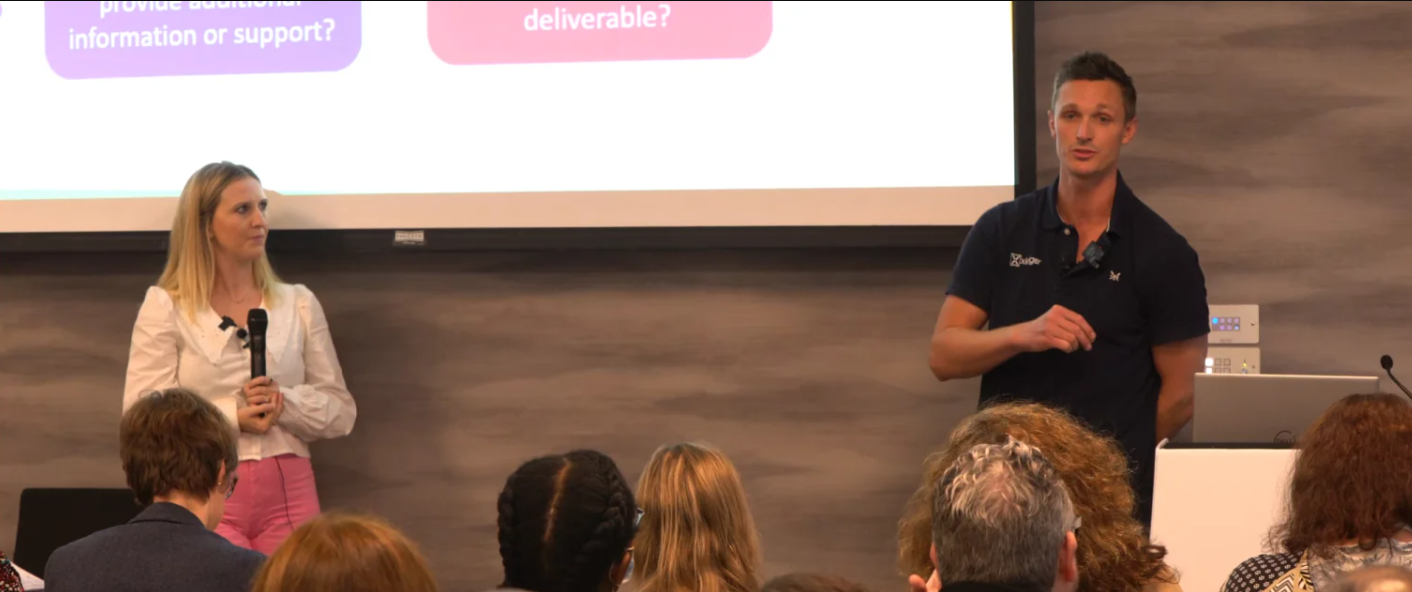
Webinar
How to Deliver a Successful Digital Transformation Project With Comic Relief and Xledger
This speaking session covers:
- How to identify red flags and recognise the need for change
- Steps to building a compelling business case for digital transformation
- How to support employees during the transition
- How to engage stakeholders throughout the process
- Ways to create a robust post-implementation plan

Article
Charity Digital Transformation: A Conversation with Trussell
Xledger’s Russ Emmerson and Trussell’s David Conroy took to the stage at the Third Sector Conference to discuss the ebbs and flows of digital transformation within the sector.

Customer story
Herefordshire Wildlife Trust
A Herefordshire that is “richer and more diverse in wildlife, bringing its people closer to nature” is the vision for this charity, which works with over 300 volunteers, for some 5,800 members.
Get in touch
Have any questions on Xledger’s finance software?
Get in touch with one of our dedicated team.
Contact person