 United States
 Norge
Norge Sverige
 Suomi
Suomi UK
UK Danmark
If your accounting software isn’t properly integrated with your other systems, you are probably struggling with data flow, manual data entry, and time-consuming task duplication. Either your systems don’t talk to one another at all, or they talk on the equivalent of a dodgy phone line, only getting every third word of what they need from each other.

If you’ve left this situation unresolved, you’re not alone. For a number of reasons, many organisations have never properly integrated their accounting system with their CRM, HR, Payroll, or various business management systems.
Sometimes it’s because development skills aren’t present in-house to manage and build software integrations. Other times, it may be because your key stakeholders, particularly those in small businesses or growing organisations, are concerned that it will be an expensive process. Or perhaps you’ve had a poor experience with integrations in the past and fear something will break as soon as you introduce any new integrations to your current system.
There’s no denying that integration projects are challenging. But that’s not to say that with the right technology and the right provider, you can’t deliver successful integrations with your accounting software.
To learn more about how Xledger can provide your organisation with advantageous integrated accounting software, book a demo or click here to find out how our accounting software can benefit your organisation’d financial management.
Why are software integrations worth the investment?
One of the primary reasons for integrating your business and accounting software is accessing real-time data. With accurate data, you can make more informed decisions and present value-adding analysis to stakeholders, finance leaders, and potential investors.
Below, we walk through the four main advantages:
Efficiency increases across all business processes
The journey towards automation and efficiency starts with going digital, and the word efficiency has become synonymous with the benefits of technology. As Lauren Hewings, Head of Working Capital Solutioning at Visa, stated: “The move towards digital solutions is becoming table stakes.” [1]
It’s no surprise then that integrated technology should take that efficiency even further. The benefit of integration is clear in industry examples such as the UK’s Making Tax Digital (MTD) initiative. When businesses were required to keep digital records and submit filings via API-linked software, HMRC found that those businesses saved an average of 33 hours per year. [2]
And that’s just one integration – the benefits compound with each API connection. That’s why Xledger has committed to enabling as many native integrations as we can, from integrations with essential technology like Power BI, Stripe, and Breathe HR, to innovative financial technology like Pleo smart company cards that give you full visibility of expenses.
Our software also supports bank integrations, so transaction information and payments flow seamlessly between Xledger and your bank – no need to jump between these systems any longer.
Integration creates a single source of truth
The difference between financial data and an insight you can act upon is all about visibility – and having one source of truth makes this far, far easier. As soon as related data is siloed in different systems, it starts drifting out of sync and blurring your insights with errors.
It’s a pretty common problem with a pretty common cause. Deloitte’s CFO Signals survey indicates that 64% of CFOs chose inadequate technologies and systems as one of their top three challenges in driving data to insights in 2023. [3]
Deloitte commented that the root cause could be that:
“Finance has yet to consolidate and integrate the data, a step that needs to be done in collaboration with the business. That foundational work can be labour-intensive and time-consuming – not to mention costly – but it’s necessary.”
Integration is essentially an automated form of data sharing. Even back in 2021, Gartner predicted that organisations that promote data sharing will outperform their competitors on most business value metrics, and software integration makes this sharing far more efficient. [4]


Human error and data inaccuracies reduce
Integrated systems save time and mitigate human error; it’s as simple as that. As data flows seamlessly from your CRM to your business accounting system, you can trust that the data is correct, up-to-date, and not duplicated.
Principle Care Homes found their errors reduced and financial processes are more accurate and efficient after adopting Xledger. As Em Dean, Head of Operations at Principal Care Homes, told us, “Having an integrated back-office operation means slicker and quicker reporting; it reduces the risk of duplicating entries and reports not pulling through accurate data.”
With quicker and more accurate reporting, your accounting team can ensure budget holders have clear oversight of cash flow and can proactively respond to any financial trends that appear in the reports.
Automation helps integrated systems thrive
Accuracy is vital for completing feats of automation across your systems, including the use of artificial intelligence (AI). Without integration, it will simply spit out incomplete or error-prone pictures of what’s happening in your organisation.
According to MuleSoft’s 2025 report, which surveyed 1,050 IT leaders across the globe, 95% of IT leaders cite data integration as a major challenge for AI adoption. [5]
The same report found that the average number of apps used by those respondents is 897, with 45% reporting using 1000 applications or more. With these statistics in mind, it’s no wonder that IT leaders are encouraging finance leaders to invest in integrated and automated accounting solutions.
Even if your finance team is using far fewer applications in your work, you want to enable the maximum amount of integration with as many applications as possible. To do that, you should choose a vendor with an Open API.
The reason for that is sheer volume. While we’ve been building out our native integrations at Xlegder to include strategic and vital software, we’ve also integrated Zapier through our Open API, which enables the number of integrations we can offer to go up into the thousands.
Don’t go integrating alone
Technology might make integrations possible, but the right experts will make it seamless.
At Xledger, our expert integration consultants help to scope your requirements, define your functional aims, and deliver a technical specification to deploy exactly what you need. We can also help you with custom integrations, whether you want to work with us, create bespoke integrations independently, or work with a third-party service provider.
To discuss how we can integrate Xledger with your current business management systems, book your free demo today.
References
[1] PYMNTS (2024), The API Effect: Creating a Real-Time Reality for Finance Teams, PYMENTS.COM
[2] HM Revenue & Customs (2025), Making Tax Digital: Estimating the wider economic benefit, GOV.UK
[3] Deloitte (2023), CFO Signals: 1Q 2023 | Deloitte US
[4] Goasduff, L. (2021), Data Sharing is a Key Digital Transformation Capability, Gartner
[5] MuleSoft (2025), Connectivity Benchmark report, MuleSoft.com

Article
How to Avoid a “Frankenstein’s Monster” Software Integration
Integrations are often a key concern when implementing a new software, but how can you avoid creating a creaking, groaning, Frankenstein’s monster of systems bolted together?

Customer story
Irwell Valley Homes
Irwell Valley Homes (IVH) provides homes for general needs social rent, as well as specialist services in supported accommodation, for over 20,000 people across Greater Manchester.
Whitepaper
Integrations – A Roadmap to Unified Data
Download our guide to discover:
Why integrations matter for CFOs and how to build an effective integration strategy.
The benefits of integrated accounting software versus the risks of disconnected systems.
Practical steps and examples – from team roles to visual maps to checklists, our guide provides you with useful tips to understand the integration process.
Get in touch
Speak to one of our dedicated team members for more information on how Xledger can support your business.
Contact person


Our Solution
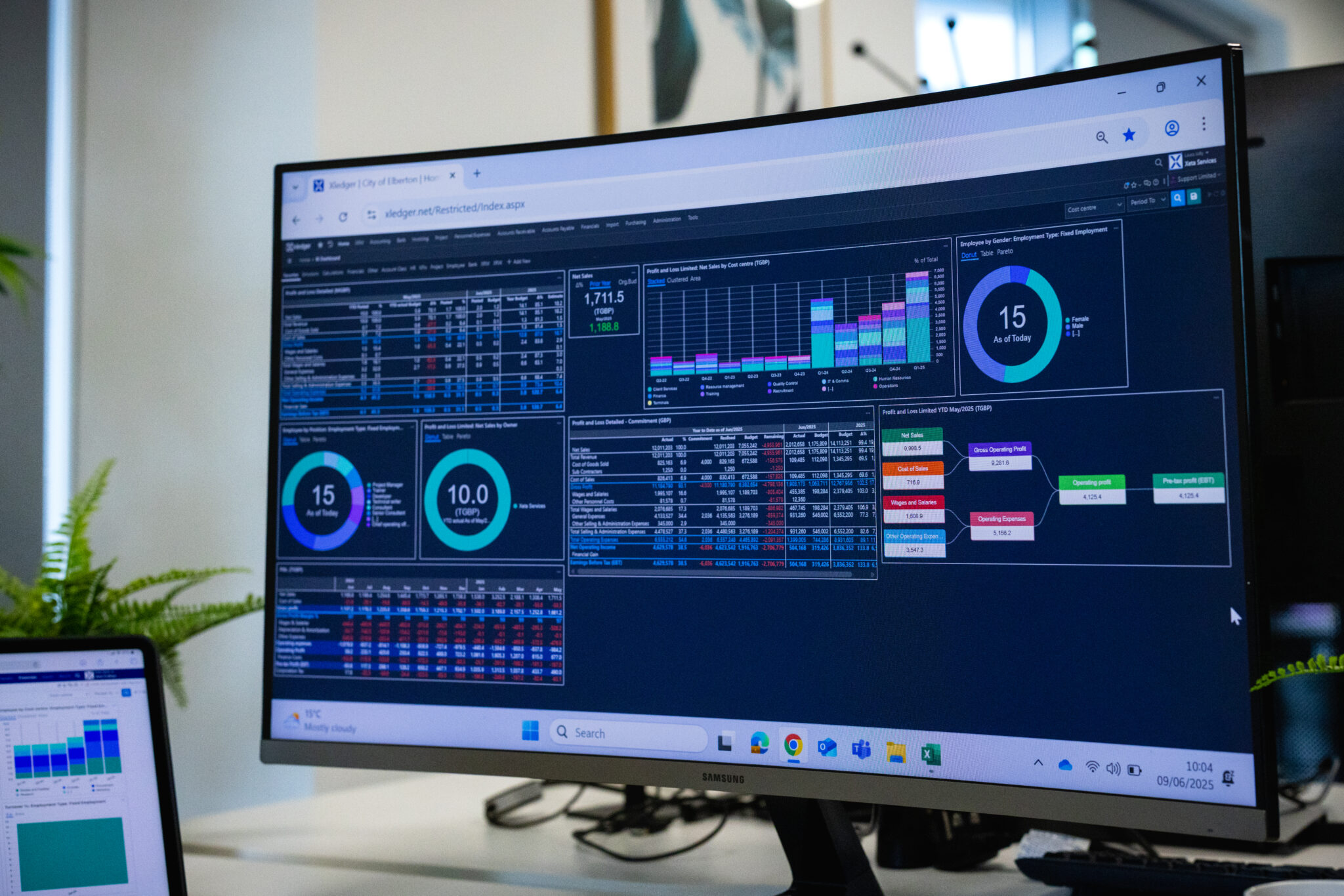
Xledger is a fully automated ERP system, we cover everything from core accounting to in-built expenses to project accounting, and much more. Find out more about what Xledger can do for your organisation.