 United States
 Norge
Norge Sverige
 Suomi
Suomi UK
UK Danmark
ESG is a corporate sustainability concept that identifies a company’s impact on the environment and society. It’s fast becoming a major buzzword in accounting and finance circles as it aims to capture a business’s measures on climate, diversity, equality, and inclusion.
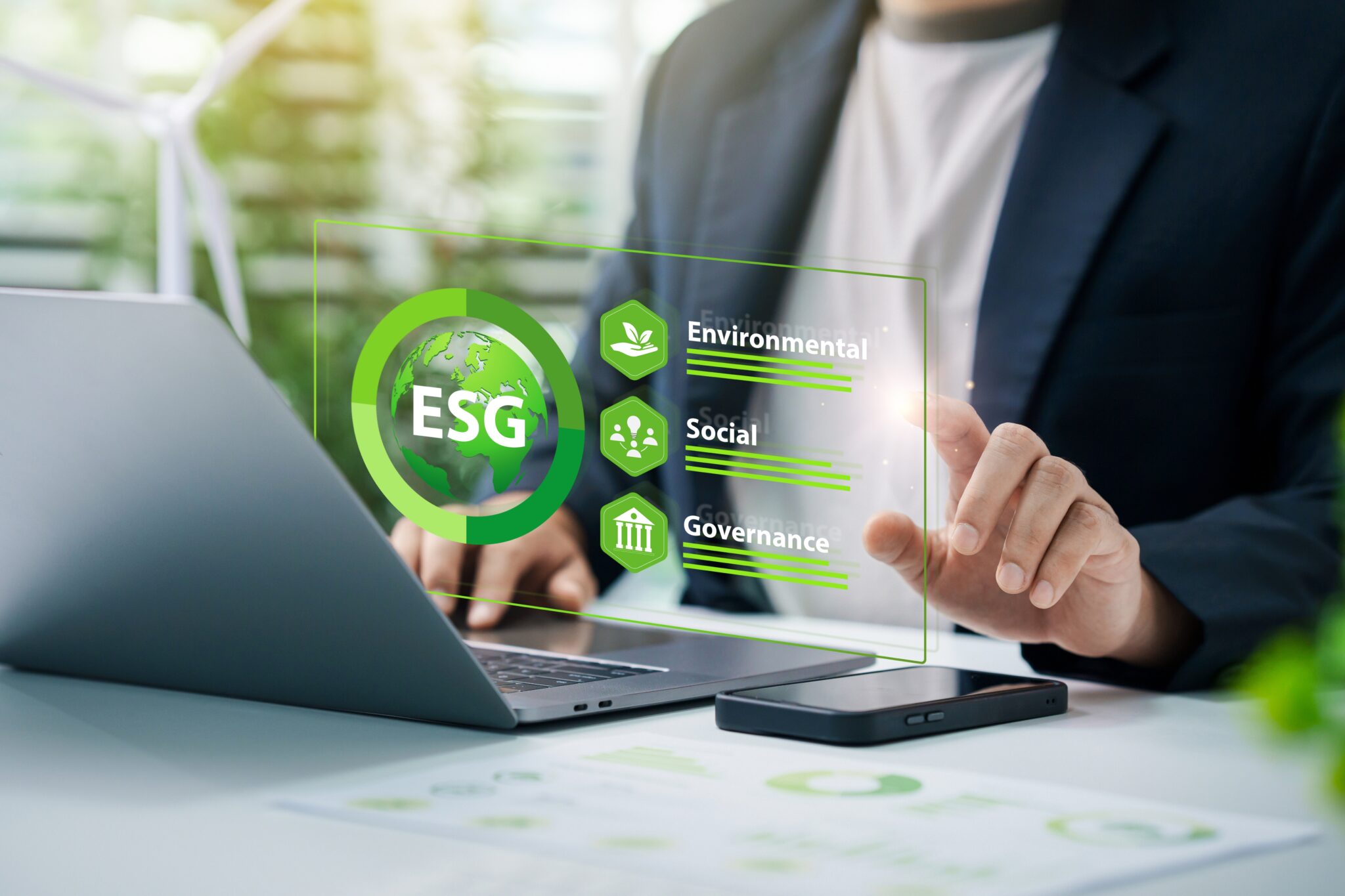
But what is ESG? What does it stand for? And why is everyone suddenly talking about it?
We’ll unpack the finer details surrounding ESG, particularly the ways accounting software can help businesses keep pace with government-mandated reporting requirements, risk management, and company operations.
Contact Xledger to book your free demo and learn how Xledger’s ESG reporting capabilities can help your business stay compliant.
Or click here to learn how our accounting software can benefit your organisation‘s financial management.
What is ESG?
Environmental, Social and Governance (ESG) is a method of assessing the non-financial impact of a company’s investments or operations. All decisions have financial consequences, but this method aims to capture parts of the business that have not been included in annual reports or supply chain registers up until now.
Essentially, ESG is a list of characteristics used to inform investors, stakeholders, and regulators on how a company makes decisions. It has become a major talking point in the accounting and finance world, largely due to new reporting standards set by the government that shed light on human environmental impact.
Overview of pillars and frameworks
ESG is a nuanced and complex way of reporting non-financial decisions. Below is a brief overview of each pillar to help you better understand the characteristics of corporate sustainability reporting.
Environmental pillar
ESG data must detail how a company impacts the environment. Carbon accounting is often used to calculate greenhouse gas contributions and details an organisation’s impact on the planet.
The term is often used interchangeably with carbon accounting, but the two terms are different. Think of ESG as an “umbrella term”, and carbon accounting as a reporting method within that concept.
Social pillar
Companies must report on how they interact with and affect their stakeholders and the wider community. This can include data on human rights, modern slavery, workplace safety, and diversity and inclusivity.
Governance pillar
Governance reporting must detail company operations and leadership practices, including executive pay, board diversity, business ethics, and shareholder rights.
The Greenhouse Gas Protocol
The main global framework is the Greenhouse Gas (GHG) Protocol Corporate Standard, which is used to measure and manage greenhouse gas emissions. This provides standardised tools and guidelines to help governments and organisations to report on their GHG emissions consistently.
Organisations are now required to ask their suppliers for Scope 1, 2, and 3 emissions Carbon Reduction Plans. Similar measures will be in place for suppliers to companies in the EU that adhere to the European Union’s Corporate Sustainability Reporting Directive (CSRD).
Scope 1, 2, and 3 definitions
Scope 1 emissions: Emissions generated directly by an organisation, such as pollution created by a company’s goods vehicles.
Scope 2 emissions: Emissions generated to produce the energy an organisation uses directly, like electricity to run an office or factory.
Scope 3 emissions: Indirect emissions, or upstream emissions generated by a company’s supply chain or its employees in the process of delivering its products or services, such as commuter or business travel. Also includes downstream emissions, such as carbon generated due to a company’s product’s unrecyclable state.


Carbon Accounting & ESG Reporting with Xledger
Learn more about how Xledger can support your organisation with ESG reporting.

Other common frameworks
One of the most common ESG frameworks is the Global Reporting Initiative (GRI), which provides a comprehensive set of indicators to help organisations communicate climate change, human rights, and operations impact.
Similar ESG risk management frameworks include the Task Force on Climate-Related Financial Disclosures (TCFD) and the Corporate Sustainability Reporting Directive (CSRD). [1] These also specifically focus on helping businesses report on climate-related impact and risk.
Some conversations around social responsibility within the UK include:
- Improvement of diversity and inclusion in regulated firms (under consultation)
- Implementation of mandatory ethnicity and disability pay gap reporting (under consultation)
- Transparent supply chains reporting relating to section 54 of the Modern Slavery Act 2015
- Review of greenhouse gas removal (GGR) technologies
- Recovering Nature for Growth, Health and Security: Natural England’s Strategic Direction 2025/2030
Although these requirements are aimed towards companies with large corporate governance, small- and medium-sized businesses are also expected to create voluntary sustainability reports.
Why do we need ESG?
ESG is crucial for good business practice because it helps inform sustainable investment decisions, manage risk, and align a company’s operations with stakeholder expectations. A company that transparently reports on ESG factors can boost its reputation, investment, and capital.
A Morgan Stanley survey found that 99% of young* European investors are “very interested” in sustainable investments. The respondents who plan to increase investment suggested that positive ESG rankings correlate with better investment outcomes. [2]
It’s clear to see that the next generation of investors is not solely concerned with a company’s financial prospects. Young investors understand that without the sustainable business practices encouraged by ESG reporting, there can be no financial growth or longevity for a company.
Successfully reporting risk and asset management helps finance leaders and stakeholders to make more informed decisions surrounding environmental impact.
*European investors aged between 18 and 28 years old.
Challenges mid-market businesses face when ESG reporting
ESG is becoming a fundamental accounting practice; however, businesses may face difficulties when reporting on ESG due to the lack of a standardised global framework. A lack of globally recognised regulations can lead to inconsistent reporting and added costs for small- and medium-sized enterprises.
The Morgan Stanley survey states that 68% of global respondents believe greenwashing and authenticity are significant sustainable investment barriers, with 88% of European respondents agreeing with the statement: “companies should address environmental issues”. [2] We can clearly see from these figures that transparent and accurate reporting is important for investor attraction and engagement.
On the other hand, greenwashing is a major deterrent to new investors, particularly in the younger generation. Mid-market businesses without ample accounting and finance resources may struggle to keep pace with the evolving nature of the regulatory landscape. Without the correct software, organisations risk falling behind and incurring penalties or loss of reputation.
Mid-market businesses that can’t spare the necessary resources to outline scope 1, 2, and 3 emissions, for example, should not attempt to falsify or greenwash their information. Instead, investing in software which provides comprehensive reporting capabilities is the best way to continue operating transparently and attract new investment.
Xledger’s ESG reporting tools
Businesses need the best accounting software to stay compliant with mandated requirements, particularly as global governments develop new reporting standards. Some non-negotiable tools include agile reporting and seamless integrations.
Xledger’s carbon reporting function calculates emissions based on cost. Our flexible reporting tools help present this data to key stakeholders in digestible ways. With seamless integrations between supply chain management and inventory systems, businesses can keep track of scope 1, 2, and 3 emissions. It is then easier to disclose and improve on environmental impact, leading to more sustainable operations.
Similarly, Xledger automatically creates an audit trail for all business operations, ensuring data is free from human error and duplication. Automated data consolidation gives finance teams real-time access to data. Instead of creating sustainability reports that become outdated as soon as the data is extracted, finance teams can simply visit pre-configured dashboards and present ESG figures in real time.
Next steps
ESG will soon become just another accounting practice. Stay ahead of the regulatory changes and learn how to leverage automated reporting to your advantage. Get in touch with our team and discuss Xledger’s corporate responsibility features today.
References
[1] Osborne Clark (2025), Environment | UK Regulatory Outlook April 2025.
Webinar
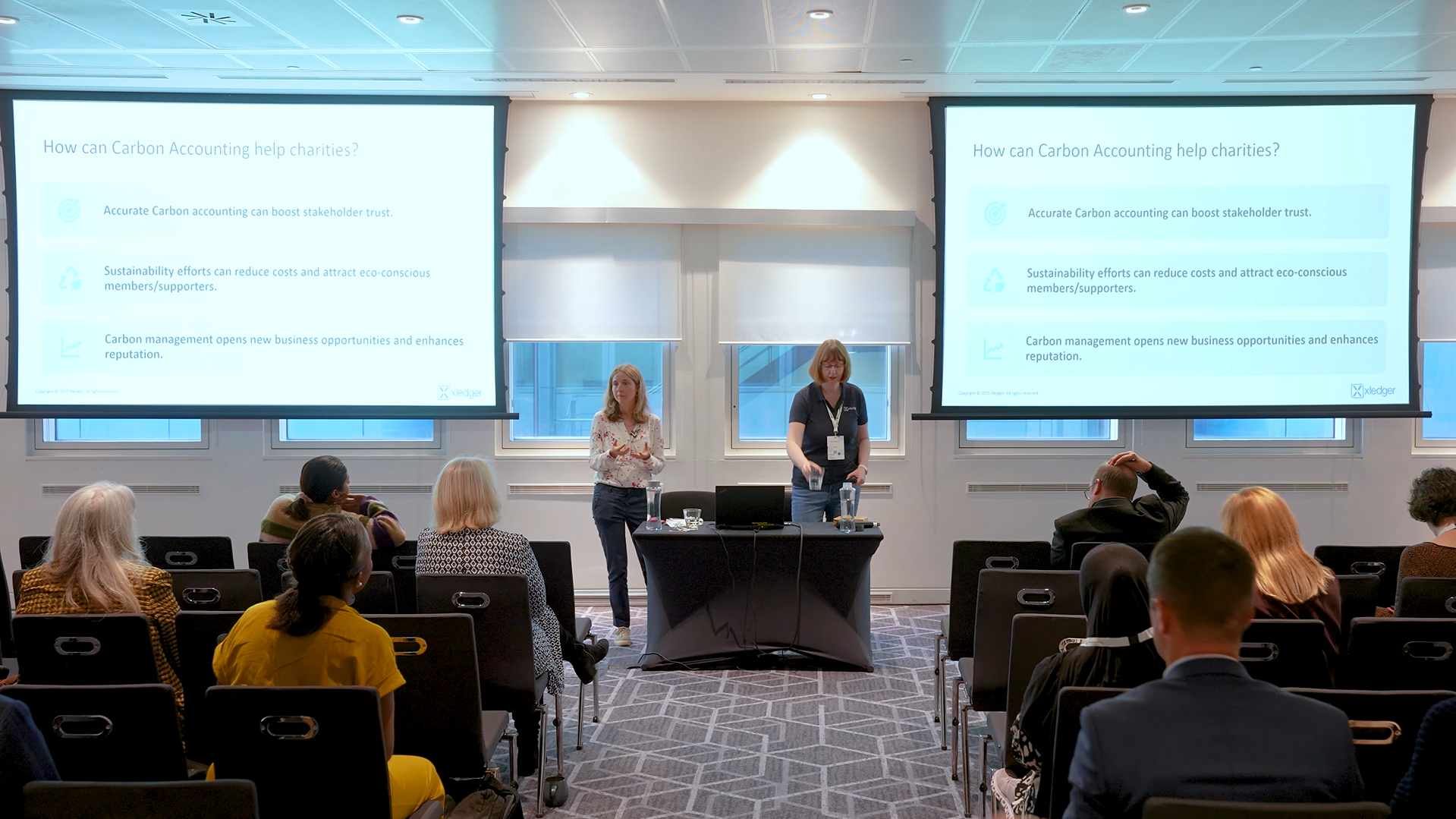
ESG and Carbon Accounting: What Charities Need to Know – Charity Finance Summit 2025
This speaking session covers:
- How charities can automate ESG reporting while ensuring they comply with SORP regulations
- The valuable insights that ESG and carbon accounting can uncover across not-for-profit organisations
- A real-world case study from We The Curious, exploring how the science centre simplified carbon accounting
Article
Is Carbon Accounting No Longer Only for Larger Firms?
If you’re a CFO for a mid-market business, you might want to put off carbon accounting for as long as you dare. It’s not that you don’t care about reducing emissions and staying accountable. It might simply be that your financial reporting team already has enough work on their plate.
Whitepaper
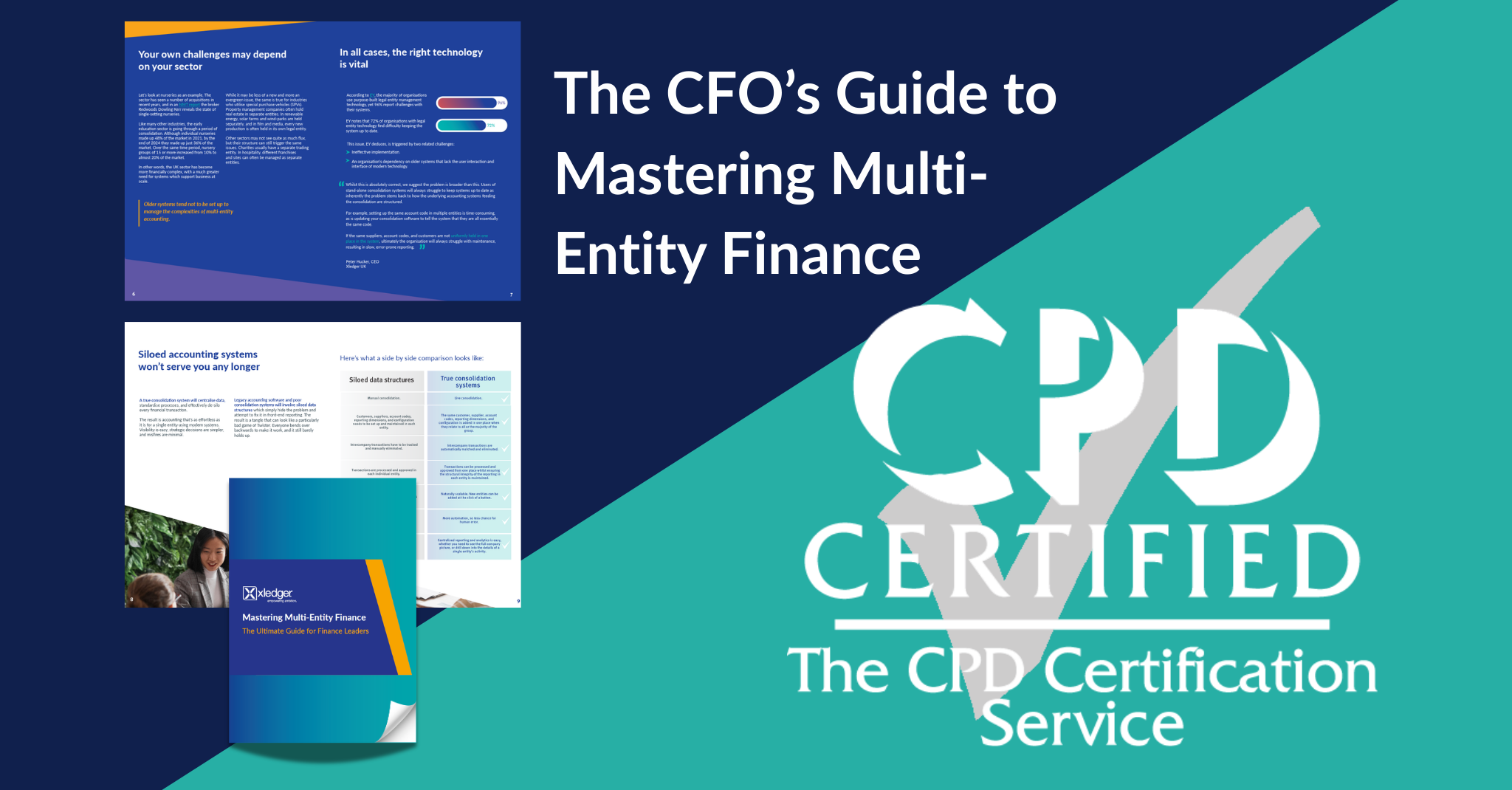
Mastering Multi-Entity Finance
Welcome to Xledger’s CPD-Certified guide.
Are you a finance leader of an expanding business with multiple entities?
Our guide to Mastering Multi-Entity Finance explores the challenges faced when working with a multi-stranded business, the pitfalls of using legacy systems, and how a centralised hub can improve your insight into group financial health.
Complete the learning to receive:
- CPD certificate
- Accompanying learning materials
Get in touch
Speak to one of our dedicated team members for more information on how Xledger can support your business.
Contact person



Who we work with
Xledger’s finance software solution is designed for mid-market to large enterprises. We work with organisations in many sectors and with our flexible solution we can support those sectors with specific needs.