 United States
 Norge
Norge Sverige
 Suomi
Suomi UK
UK Danmark
Efficient accounting processes do not have to be complex. In fact, the simpler the process, the less room for confusion and misunderstanding. In this article, we unpack common weaknesses in accounting processes and explore ways finance teams can build efficient processes to streamline auditing.

Accounting is full of strict processes for good reason. The Financial Reporting Council (FRC) mandates that all accountants must “present a true and fair view” in accordance with IFRS, CIPFA, and UK GAAP. As these regulations continue to evolve, they leave less and less room for subjective supporting documents.
This is a positive move for accountants and auditors as it prevents delays in the audit process where subjectivity needs to be discussed. Internally, however, some organisations may still struggle with creating efficient year-round processes to streamline the process at year-end.
Xledger’s automated accounting software has a role especially for auditors, so they can have direct view-only access to the system, allowing finance professionals to easily provide full, traceable audit trails. Book a demo or click here to discover how our software can support your business.
Common process inefficiencies and how to solve them
Auditors don’t want to find gaps in supporting documentation, and finance teams don’t want to be inundated with requests and adjustments. Not only does this slow down the auditing process, but it also overloads the finance team with non-BAU work and pressures the relationship between an auditor and an organisation.
Typically, these inefficiencies occur when an organisation has complicated or manual methods of storing evidence for auditing periods, or control measures that are difficult to trace from the start to the end of a process. This may be due to outdated technology lacking automation, or because of a poor segregation of duties, thus increasing the risk of fraud or collusion.
“We wanted a system that could adapt to strategic requirements in the future, could produce reports that would be useful to the rest of the business (not just finance), and we also wanted to improve data quality, especially for year-end. And what we have now with Xledger is yards ahead of what we had before.”
Bex McGann, Head of Finance
Comic Relief
Inefficiency: Poor data quality and missing support documentation
Every posting must have supporting documentation to evidence the accounting entry as a reflection of the truth. Without it, auditors will request adjustments that accurately reflect the truth, delaying the audit process on both the auditor’s and the finance team’s sides.
Poor reconciliation could manifest as a lack of a receipt, invoice, contract, or any other type of written agreement that supports an accounting entry. Additionally, it could be that transaction data is incorrect or that numbers on a spreadsheet do not align month on month.
As a result, there is an inefficient flow of data that wastes time for the accountant who must search for backup and the auditor who has to wait for that backup.
Solution: Define audit requirements early
Creating a month-end checklist helps define period-end procedures, what to check for, and the correct actions to take. Preparing early for period-end is seldom an option, but laying out the necessary checks that finance must perform before closing accounts each month can streamline the process.
Linking the correct supporting documentation directly to the accounting transaction ensures that the evidence is easily obtainable to prove accuracy. A finance team that prioritises accuracy improves both its accounting processes and its relationship with an auditor.
Finance teams can define period-end tasks to help them routinely link backup documentation to the correct transactions, simultaneously reducing the stressful month-end rush and preparing clear evidence for auditing.
Inefficiency: Over-reliance on spreadsheets
An over-reliance on spreadsheets is highly detrimental to accounting processes for two key reasons. The first is that spreadsheet formulas can break, and the second is that spreadsheets lack robust version control.
It’s fair to say that all accountants will use spreadsheets at some point in their careers. But finance teams that exclusively or excessively use them for reporting often encounter broken formulas or compromised control mechanisms. A finance team member then has the gruelling task of fixing the formulas so the sheet continues to function.
Similarly, spreadsheets are incorrectly viewed as source data when, in reality, they are highly editable files that lack version control. They cannot provide an audit trail where supporting documentation is directly attached to each posting. Consequently, auditors are unable to match these transactions back to supporting documentation, again delaying the overall process.
“Xledger does exactly what I wanted. The fund management is brilliant – our auditors were very thankful! They came in and loved it. Because we could give them direct access to the system, I had very few interruptions to my work, as they could pull out any information they needed. We weren’t able to do that with our last system.”
Amanda Eckley, Finance Manager
Herefordshire Wildlife Trust
Solution: Invest in modern accounting software
Keeping pace with modern processes helps to iron out inefficiencies. With automated accounting software, finance teams eliminate their over-reliance on spreadsheets and instead access real-time, accurate data.
As a result, all reports are complete, audit trails are full, traceable, and automated, and auditors can drill down to the transaction level and seamlessly review supporting documentation.
“Historically, all invoice approvals would be dealt with manually and became very time-consuming for the finance team and budget holders to keep track of invoice status. We have now built and systemised all approvals within the system, providing a clear audit trail for finance and an easy-to-use interface for invoice approvers.”
Alistair Deswert, Group Financial Controller
Bristol Sport
Inefficiency: Weak internal process controls
Organisations that lack structured financial processes risk marring the communication between an auditor and the finance team. For example, without a designated audit sponsor, data requests are unclear, and multiple people throughout the organisation may duplicate replies to requests.
The overall result is frustrated auditors and frustrated finance team members, both working to tight deadlines. If an auditor requests an adjustment and receives different responses, the process is delayed further, highlighting a lack of control around communications.
Solution: Introduce internal controls
When we hear the word control, we think of complex structures, but this isn’t the case in finance. Accountants prefer straightforward, robust controls, and implementing internal control processes throughout the year is highly effective for ensuring audits are pain-free.
To maintain these controls, a finance team can select an audit sponsor that tackles adjustments and auditor relationship management, as this facilitates good communication and accountability.
Alongside this, segregating duties across an organisation is essential for maintaining financial truth and fairness throughout the year. To prevent fraud or collusion, organisations should separate duties between different staff members, so that the person setting up the invoice is different from the person approving the invoice.
“A strong connection between an auditor and an accountant is often built on an efficient mechanism for storing back-up that easily links to each accounting entry”
Laura Brophy, Learning & Development Manager
Xledger UK
Building supportive processes
Building supportive auditing processes shouldn’t be a sprint to the finish line. Instead, they should be considered over a few months, undergoing a review by finance and non-finance users where appropriate.
By taking time to focus on efficiency rather than speed, finance teams naturally improve their month-end and year-end processes, and investing in modern technology bolsters this process.
Book your free demo to learn how Xledger’s highly automated software supports organisations like yours to streamline year-end and auditing processes.
Get in touch
Have any questions on Xledger’s finance software?
Get in touch with one of our dedicated team.
Contact person


Article
Can Cloud Accounting Solve Month- and Year-End Challenges?
The challenge of month- and year-end has long been “ensuring all hidden information is revealed in a timely manner,” as Maureen Mascha wrote in the International Journal of Accounting Information Systems over a decade ago. [1]

Customer story
Apex Housing
Apex Housing Association (Apex) provides and maintains more than 7,000 high-quality homes and provides support to almost 18,000 tenants and residents across Northern Ireland. Since 1965, they have provided support services, associated care, and accessible high-quality housing to their community.
Whitepaper
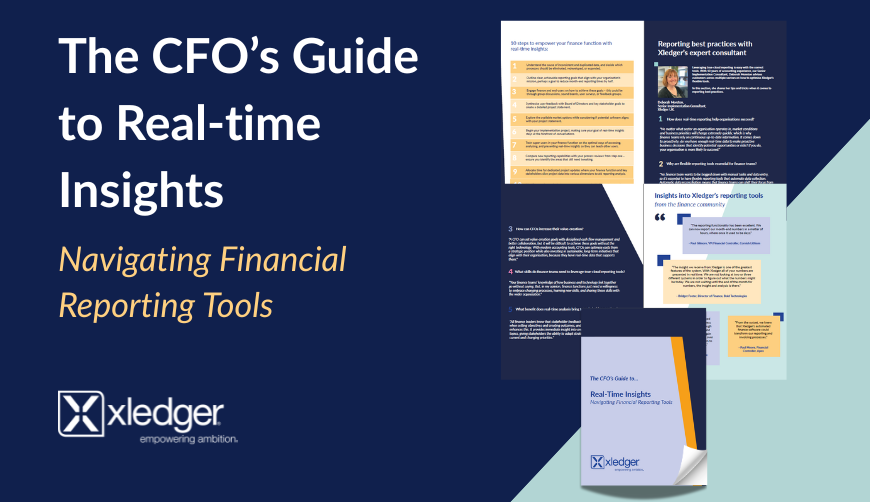
The CFO’s Guide to Real-time Insights
Download our guide to discover:
The challenges that modern CFOs may face while operating without real-time insights.
Reporting best practices with Xledger’s expert consultant.
How well you utilise your current reporting tools.

Our Solution
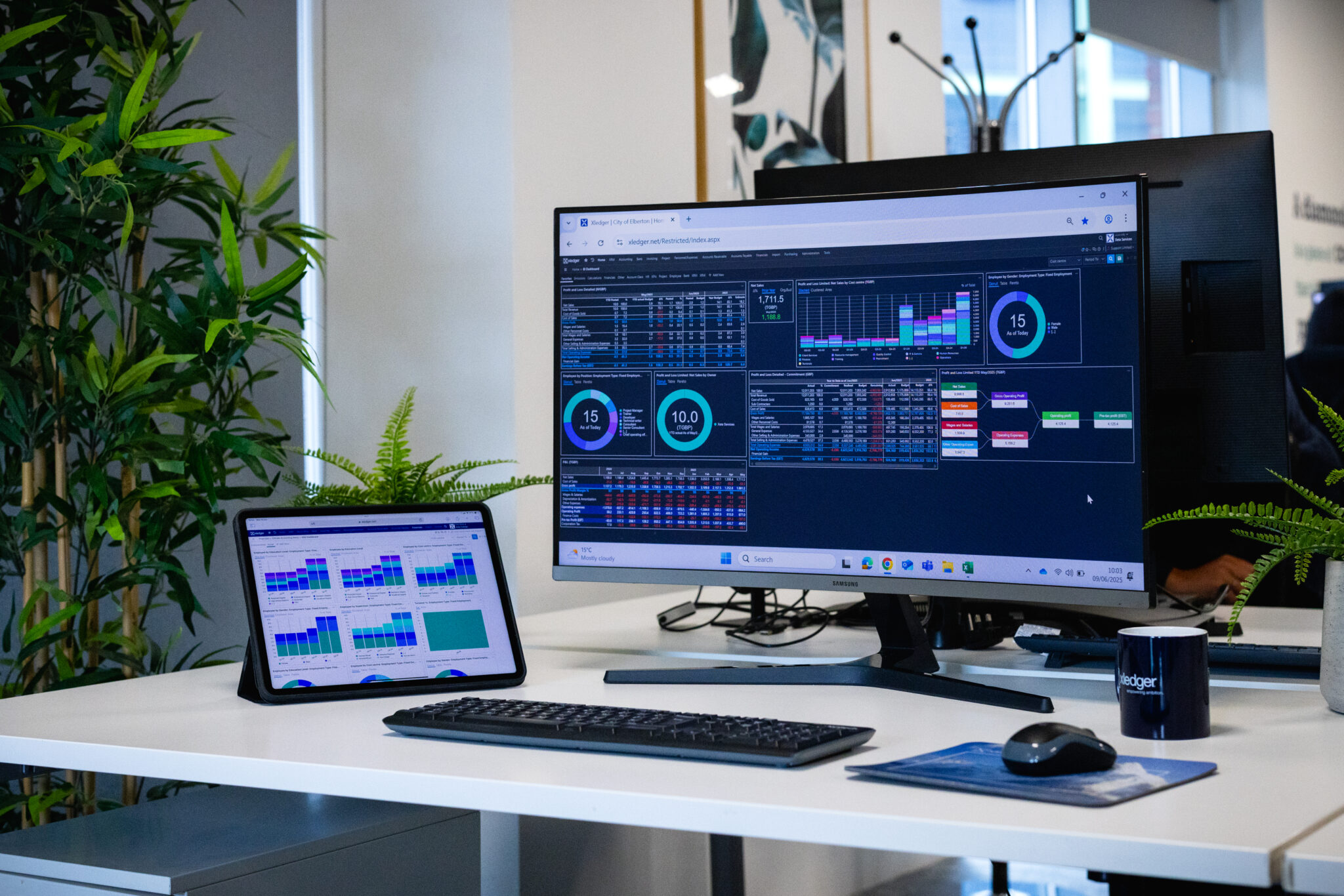
Xledger is a fully automated ERP system, we cover everything from core accounting to in-built expenses to project accounting, and much more. Find out what Xledger can do for your organisation.