 United States
 Norge
Norge Sverige
 Suomi
Suomi UK
UK Danmark
Hospices rely on real-time insights to ensure each resident has access to high-quality, holistic care. Without financial visibility, hospices cannot complete their mission to help those most in need of care. Discover how legacy technology jeopardises a hospice’s ability to operate efficiently.

Since 2020, economic vitality for adult and children’s hospices has decreased in real terms. Local NHS funding for children’s hospices has declined 11% since 2021 [1], and 64% of adult independent hospices have reported a deficit, the highest percentage since 2014. Xledger can help hospices manage funds and report in real-time. [2]
Are you a hospice Chief Financial Officer (CFO) tasked with overhauling your organisation’s technology? Visit our market page to discover how Xledger caters to care organisations like yours, or contact our dedicated team to book your free demo.
3 ways outdated finance software limits visibility
Legacy systems create blind spots for hospices, hindering control, resilience, and sustainability in an increasingly constrained funding environment. We explore three ways legacy finance systems limit visibility, including inadequate interoperability, reporting, and forecasting.
1. Inadequate interoperability
Poorly integrated systems can be detrimental to all operational areas. For hospices, budgets are tight, so investing in faulty system integrations is a major setback. Unfortunately, unless care management systems are integrated with other platforms, like finance software, they will always lack interoperability and, as a result, limit visibility.
When data doesn’t pass between systems automatically, data siloes occur. Hospice finance functions must pick up the slack, performing more frequent manual intervention tasks to ensure data ends up in the right place. Unfortunately, as manual intervention increases, so do input errors, limiting data visibility and accuracy even further.
2. Fragmented reporting
According to the Hospice Outlook report, 32% of C-Suite executives believe regulatory compliance is a top business issue that will influence hospice modernisation. [3] Legacy systems lack the modern infrastructure that cloud solutions offer — such as automated audit trails, powerful visualisation tools, real-time dashboards, and reporting dimensions. As a result, outdated systems cannot support compliant reporting.
Combine a lack of compliant reporting with limited interoperability, and a hospice can quickly lose the financial visibility that ensures they allocate the correct funds to correct cost centres for high-quality care.
3. Inefficient forecasting
When outdated technology forces hospice finance teams to spend time reconciling data, hospice leadership is left making decisions with incomplete or out-of-date reports. When it comes to forecasting at year-end, this can jeopardise a hospice CFO’s ability to allocate funds accurately, leading to poor distribution of unrestricted funds.
Likewise, budget holders must operate with budgets informed by incomplete data, negatively impacting the care they can provide to residents.
Long-term limited financial visibility creates additional problems in the following areas:
- Care quality
- Cash flow management
- Risk management
- Trustee and stakeholder confidence
- Workforce planning and staff motivation
- Service continuity
FAQs
Legacy finance software relies on manual reconciliation due to disconnected systems. This causes delays in reporting and reduces financial visibility.
Yes, cloud finance software provides live financial insights, enabling timely and informed decisions that ensure the long-term quality of life for residents.
Without real-time data, hospice finance teams struggle to provide decision-makers with information on funding or operational pressures. This can include cash flow obstacles, cost control, and other risks.

Article
Unlocking the Power of Integrated Systems for Care Homes
When running and growing a care business, the focus should be about creating more time to care for residents. In the current climate, where staffing is a big challenge, funding is even more crucial than ever to balance rising costs, technology plays a defining role in ensuring that the care homes are equipped to stay on top of their ambitions and invest in the future.
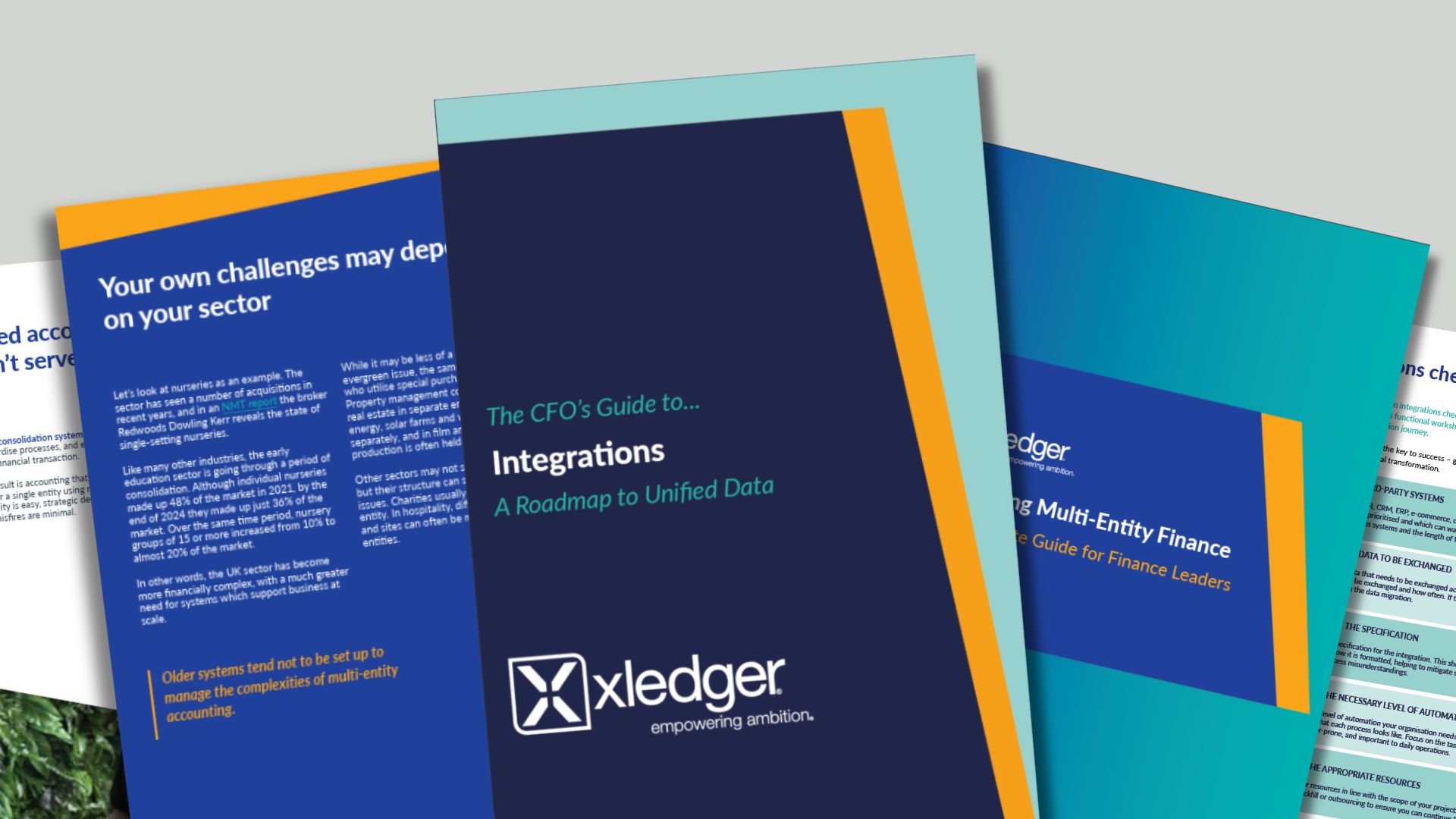
Whitepaper
Series: The CFO’s Guide to…
On average businesses stay with the same finance software for 5-7 years, so the pressure is on to get it right when looking to change or invest in new finance software. In this series of guides, we dive into 5 key areas CFOs and finance teams should be clued up on when looking to change accounting systems. We hope you enjoy.

Webinar
Scaling Smart: How Finance Teams Can Master Multi-Entity Operations
This webinar covers:
- How to streamline intercompany transactions and reduce errors
- Best practices for consolidating financial data across entities
- Managing a master chart of accounts and registers
- A real-world example of finance teams transforming multi-entity processes
Get in touch
Have any questions on Xledger’s finance software?
Get in touch with one of our dedicated team.
Contact person

How can hospice CFOs access real-time insights?
Compliant fund reporting tools: Compliant and audit-ready fund reporting takes the strain out of closing periods, allowing hospice finance teams to analyse fund allocation to ensure each hospice department has the appropriate funds to improve resident quality of life.
Powerful reporting dashboards: Insight into historical and real-time data enables hospice finance teams to engage with meaningful data in easy-to-visual, self-serve dashboards and multi-dimensional reports for better decision-making.
Seamless integrations: Interoperability is crucial for getting data to the right place, at the right time. Robust integrations eliminate manual error and task duplication, saving time for hospice finance teams to analyse numbers, instead of simply reconciling data.
Modernise your hospice finance function
For hospices, visibility is the best way to improve patient care. Through real-time insights into restricted and unrestricted funds, and a connected business ecosystem with a modern finance solution as a single source of truth, hospice CFOs can gain control of finances to ensure greater quality of life for all residents.
Book your free demo with our accountancy-trained solution consultants and begin your migration to the cloud.