Norway
 Sweden
 Finland
 United Kingdom
 Denmark
 United States
Rebekah Clegg, Finance Systems Supervisor at Cobalt Housing, joined Xledger experts on stage at the Housing Finance Conference in ACC Liverpool to discuss managing change in a housing association’s finance digital transformation.

A brief project overview:
Cobalt Housing implemented Xledger in 2023. With the end of support for their legacy finance system, Open Accounts, looming, Cobalt Housing recognised the need for a finance system overhaul. Kicking off the discussion, Rebekah summarised the reasons for the project.
“We were on a legacy system, which will no longer be supported soon, and we were really keen to move towards a cloud-based system. We were, and still are, going through a wider digital transformation piece across the business, so changing our finance system aimed to kickstart that wider change.”
From an Xledger delivery perspective, Marta Lesniak, Senior Project Manager at Xledger UK, listed the key risks that were identified early on:
- Internal and external resource availability
- Senior leadership visibility and project team empowerment
- Informed decision-making and accountability
- Clearly defined project scope that prevents scope creep
- Resisting change opportunities
- Resistance to opportunities for change
- Data access, cleansing, control, and sovereignty
- Testing coverage from different business areas
- Impact of different digital transformation projects
Ironing out these risks, as host David Tillen, Senior Business Development Manager at Xledger UK, observed, doesn’t just aid the implementation; it helps to embed new ways of working that can be transferred to other digital transformation projects throughout the organisation.


Xledger & Cobalt Housing: Managing Change in a Finance System Transformation
This speaking session covers:
- How finance teams can prepare for a finance system transformation
- How to manage change during implementation and go‑live
- Lessons learned from a real housing sector transformation

How did Cobalt promote staff engagement in the project?
Rebekah noted that Cobalt’s project team focused on early engagement to ensure staff buy-in. “We made sure to highlight existing problems and how this change is going to improve those problems for staff, rather than saying ‘this is what’s happening.’”
For staff members who have used the same system for years, even decades, change can be daunting. However, mapping out how these changes will affect individual processes is a great way to invite open conversations about the change.
Marta noted that learning styles also play a huge part in change management because people learn in different ways. Xledger provides a hybrid approach to training that caters to diverse learning styles.
Driving momentum during the project, and post go-live
There are always challenging moments in any project, but awareness is critical to dealing with obstacles in informed and timely ways. “Cobalt’s initial project timeline was ambitious,” Rebekah admitted. “We had clear expectations of what we wanted from the system, so when we were conducting testing, it was important for us to highlight areas of the system that needed further development. Of course, this created delays, but worthwhile ones.”
David agreed, adding that projects that allow adequate time for testing are more successful because they are aware that implementation and going live with the system aren’t the finish line — they’re just the starting points.
Cobalt’s project team took measures to ensure the whole organisation felt supported throughout go-live. Some initiatives they implemented were:
- In-office working for the first two weeks of go-live to support the transition
- Step-by-step guides for day-to-day processes to help with navigation
- Elements of internal hypercare for staff (alongside the external hypercare provided by Xledger)
- Regular drop-in sessions for people working from home to prevent isolation
- Ensuring the right people were available to support others
- Encouraging open and honest feedback about the system and feeding that back to Xledger’s project team
To ensure a smooth transition from implementation to go-live and into BAU, Marta noted how critical it is to complete any outstanding tasks. “Don’t leave any legacy items hanging about. Once it’s all done, focus on embedding your new processes.”
To prevent staff feeling unconfident, Marta also encourages allocating time to gather feedback. “People have a tendency to fall back into old habits, so keep an eye out for frustration and uncertainty, and make sure people have time and space to voice their concerns.” After your finance team is feeling confident with their new processes, project teams can focus on building further efficiencies and improving existing functionalities.
Project outcomes and learnings for Cobalt and Xledger
One of the biggest outcomes of Cobalt’s finance transformation has been more consistent processes. “In our old legacy system,” says Rebekah, “we had one core finance system, but then multiple feeder systems into that. Since implementing Xledger, we’ve effectively gone from three finance systems to one.”
By migrating to a cloud-based solution, like Xledger, housing associations benefit from less system downtime, process standardisation, and increased accessibility. Alongside these outcomes, Cobalt has also seen strong buy-in from the wider business, “which speaks volumes about how user-friendly Xledger is,” Rebekah noted.
“We’ve learned a lot from working with Cobalt,” Marta said, “mainly because we could have open and transparent communication channels in the project.” Thanks to Cobalt’s clear expectations and pragmatic approach to the project, Xledger and Cobalt were able to tackle inevitable delays and obstacles with confidence.
Testing is arguably the best way to tease out any difficulties in the system before moving to a live environment, but if Cobalt were starting the project again, Rebekah candidly admitted that she’d focus more on user acceptance. “Our main priority was testing the system, meaning we didn’t necessarily place enough importance on what our daily processes would look like.”
Cobalt’s key takeaway:
“The biggest lesson for us is having a realistic timeline and making sure you have the right resources in place,” Rebekah observed. “It’s really easy to underestimate any new system implementation, to be ambitious at the start. But, in reality, these things take time, take resources, and create pressure. Getting the right people available from the beginning of the project is critical.”
Xledger’s key takeaway:
“I’ll always bang the drum around resource availability,” reiterated Marta. “But also, openness and transparency are absolutely crucial to make sure the current project, and future projects, are successful.”
David rounded up the session by echoing the panel’s sentiment, noting that a well-planned implementation that considers both customer and provider resource sets itself up for success.
Book your free demo to learn how Xledger helps organisations like yours to take control of their financial management.

Article
How can Housing Associations Unlock Real-Time Insights?
Real-time data is vital to monitoring schemes and gaining funding for new developments, but how can housing associations access it? We explore the obstacles to real-time reporting, why they occur, and how robust reporting tools can help the Housing sector overcome them.
Webinar
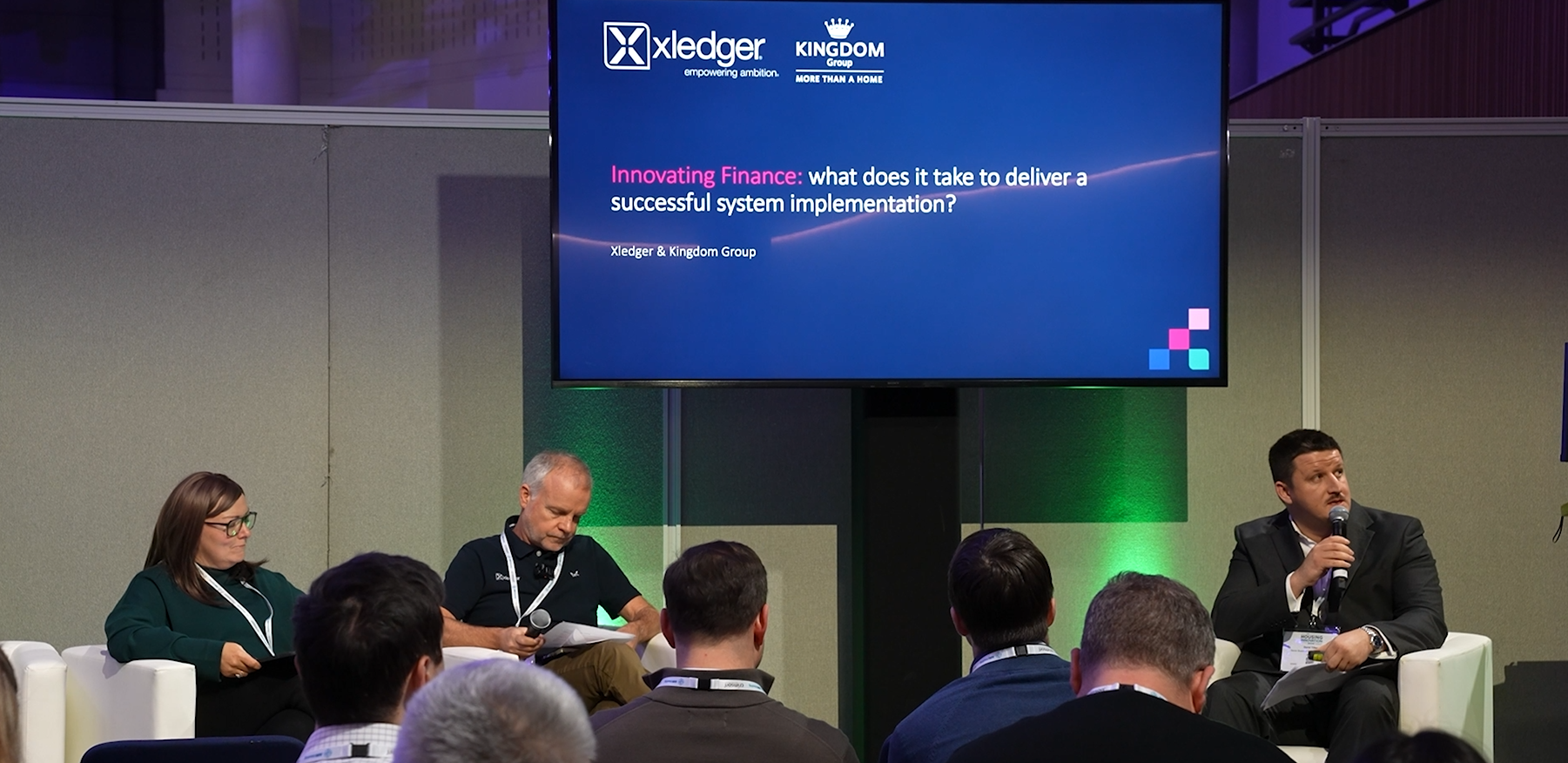
Xledger and Kingdom Group at the Housing Innovation Show 2026
This speaking session covers:
- Kingdom Group’s real-world case study and how it overcame the hurdles of new system adoption and change management
- How housing associations can gain smoother workflows and better financial insights
- Tips for ensuring all stakeholders are engaged with a finance digital transformation project
- Why modernising financial processes helps strengthen day-to-day operations
Guide
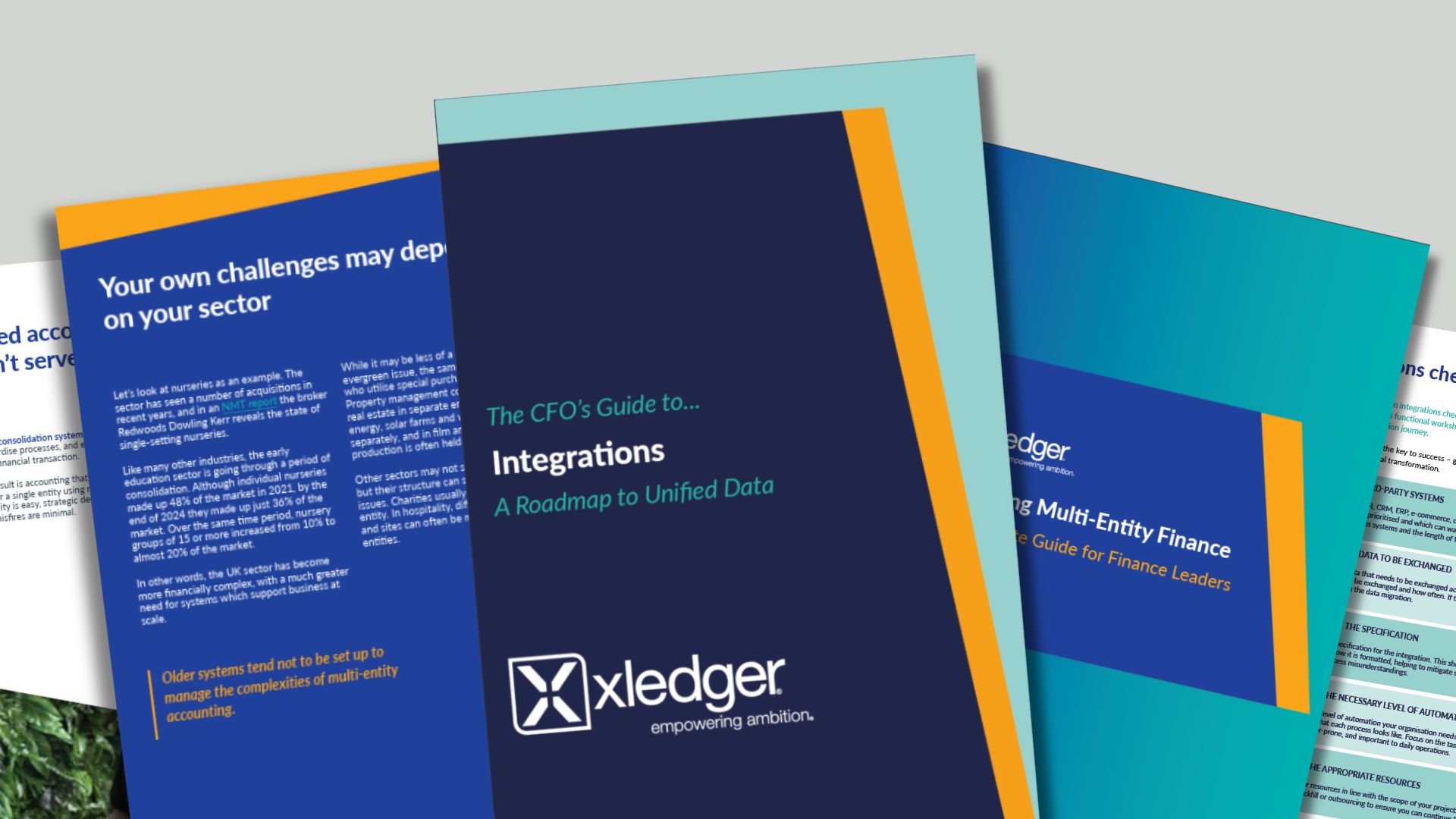
Series: The CFO’s Guide to…
On average businesses stay with the same finance software for 5-7 years, so the pressure is on to get it right when looking to change or invest in new finance software. In this series of guides, we dive into 5 key areas CFOs and finance teams should be clued up on when looking to change accounting systems. We hope you enjoy.
Get in touch
Have any questions on Xledger’s finance software?
Get in touch with one of our dedicated team.
Contact person