Norway
 Sweden
 Finland
 United Kingdom
 Denmark
 United States
This week in Accountant’s Corner: Our Senior Implementation Consultant, Deborah Moreton, shares her top tips for streamlining the stressful year-end close. Deborah draws on real-world accounting and finance experiences, having worked in the sector for over 10 years.
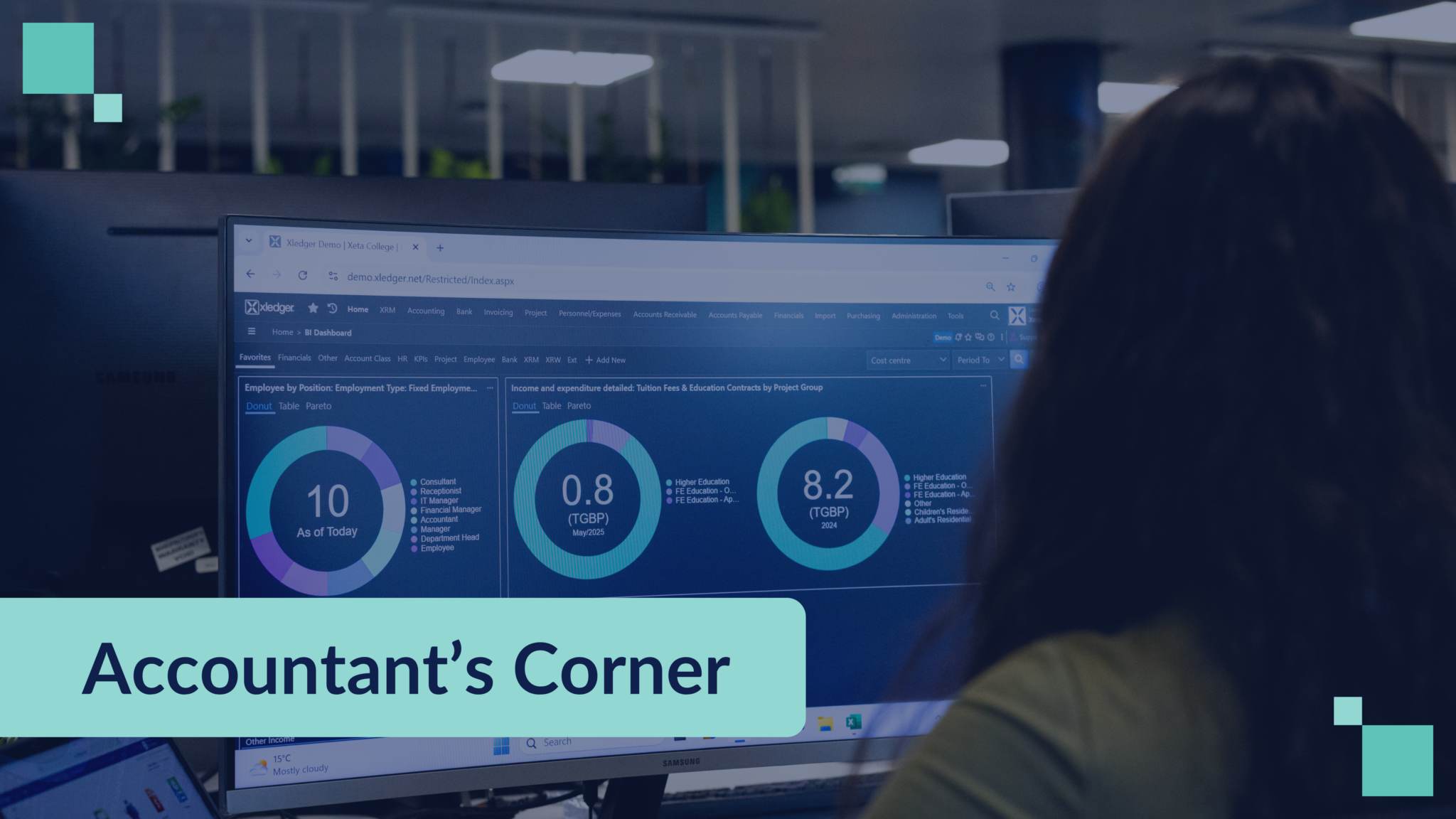
Accountant’s Corner features direct contributions from our experts. From implementation through to technical support and solutions, our teams all come from accounting backgrounds, so they truly understand how technology needs to support finance professionals. We hope you enjoy reading!
Your accounting year-end can cause an abrupt spike in work, which reduces resources significantly. The optimal approach to reduce this should be a continual, organised process that ensures both compliance and strategic insight throughout the year.
Ensuring you have a rigorous month-end and quarter-end close process throughout the year will enable you to focus on key activities at year-end rather than trying to reconcile back for an entire year.
Communication between departments is key to ensuring that everyone is aware of deadlines, and adherence to these should be driven from the top down across the business.
If you’re coming up to your year-end, there are aspects you can begin early to help reduce the impending impact on resources.
Reconciliation
Reconciliation is an important process to ensure you have accurate financial data. This, in turn, aids in preventing fraud, tracking cashflow, and improving compliance. With so many areas to reconcile, preparing in advance in this area will save you valuable time. Here are a few tips to help you streamline reconciliation:
Bank:
- Ensure all transactions posted reconcile back to your bank statements.
- Investigate old, uncleared cheques/transactions.
- Consider whether any advance gift-aided payments can be made from subsidiaries due to expected final profit levels, especially if you have daily limits on the amounts you can transfer between accounts with your bank.
Credit Cards:
- Ensure all transactions posted reconcile back to the credit card statements.
- Chase credit card holders for information on outstanding purchases/refunds and the relevant receipts/credit notes.
- Prepare a manual reconciliation for any items purchased/refunded after the credit card statement of the year and before year-end.
Loans:
- Reconcile any business loans to third-party records.
- Intercompany Accounts:
- Reconcile any intercompany balance sheet accounts.
- Settle any applicable balances for amounts owed between your companies.
Balance Sheet:
- Ensure all prepayments and accruals/deferrals are up-to-date and that you are aware of the composition of outstanding balances. Prepare a reconciliation if required by your auditors.
- Review any suspense accounts and allocate balances.
- Profit & Loss/Income & Expenditure
- Review your income and cost codes for totals that look unexpected or transactions that are in the wrong place. This will enable you to correct errors prior to the end of the financial year.
- Review any suspense accounts and allocate balances.


Manage Receivables and Payables
Reviewing Customer and Supplier records ahead of year-end is crucial for maintaining an accurate balance sheet. Consider these tips when prepping for year-end:
Customers:
- Contact Debtors at least one month before year-end to see if any outstanding accounts can be reconciled.
- Review old debts and make provisions/write-offs.
- Prepare any year-end intercompany invoices.
Suppliers:
- Contact Suppliers for updated statements to verify your balances prior to year-end.
- Review Supplier invoices for duplicate invoices.
- Review the standing data (company name, reg numbers, etc.).
- Contra any applicable balances between customers and suppliers (e.g. Intercompany accounts).
- Review open purchase orders (if applicable), and close off unrequired items to ensure year-end commitments are accurate.
Assets
Accurate financial reporting of assets is important to enable the business to maximise its return on investments. It can be a time-consuming manual process, so getting ahead of the curve can be a bonus. Are the following steps already present in your year-end asset management process?
Fixed Assets:
- Check that all items listed are still held by the company.
- Update any records for new purchases or disposals if these have not been maintained throughout the year.
- Apply any depreciation for the year that has not yet been posted.
- Check your Profit & Loss (P&L) for any items purchased that should have been capitalised.
Stock:
- Allocate time for a physical inventory count – ensure the relevant departments are aware of the information they need to provide.
- Document any damaged or obsolete stock.
Tax
Managing tax efficiently is crucial for reducing financial liabilities and legal compliance. Here are some tips to manage tax effectively at year-end.
- Ensure all possible tax has been reclaimed on employee expenses.
- Check prior VAT period transactions to ensure that everything was claimed and not missed.
- Check any foreign currency transactions for the correct tax application if reverse charges should have applied.
- If partial VAT is applicable to your business, ensure you have applied the correct rates. Also, check if any adjustments should have been posted ready for your final return of the financial year.
- Estimate your expected corporation tax ahead of time (if applicable) to plan payments.
Employee Data
Ensuring up-to-date employee data is important for financial accuracy and auditing. Preparing this early ensures that there is reduced work during the actual year-end close:
Payroll:
- Ensure that up-to-date contracts are held.
- Check that salary change or condition change confirmation letters are documented.
- Consider any holiday allowance accruals.
- Consider any bonus payments that might need to be accrued.
Close Routine
Upfront planning of your year-end close will ensure that communication is rolled out to the team and all contributing departments. This prevents last-minute surprises that tend to derail the process.
- Set internal deadlines for completion of processing and reporting earlier than statutory deadlines to give you time to prepare.
- Store all invoices and receipts digitally to ensure you have a full audit trail available, as this reduces time spent answering auditor data queries.
- Backup all of your data before finalising your year-end to protect against any losses or edits.
- Develop a comprehensive checklist, so you aren’t caught off guard by last-minute tasks.
Finally, the key to a smooth financial year-end is to delegate! One person shouldn’t be responsible for the whole list. Communicate with the team about which items are most appropriate for them to handle, both in terms of workload and capability.
Consider the benefits of upskilling the wider finance team by offering more complex tasks, provided a senior team member has time to check their work. This only adds to your team’s confidence and morale – everybody wants to feel valued.
Clear processes also encourage finance teams to identify items that they could maintain throughout the financial year. Tasks that are completed regularly are generally quicker to complete due to the familiarity with the process, and empowering the whole team to be involved is a win-win.
Want to hear more from our experts? Contact us to discuss how our consultants can support your finance system implementation journey.

Article
How to get your year-end review ready for audit
Efficient accounting processes do not have to be complex. In fact, the simpler the process, the less room for confusion and misunderstanding. In this article, we unpack common weaknesses in accounting processes and explore ways finance teams can build efficient processes to streamline auditing.
Webinar
Reclaim Your Year End – Strategies for a calmer close
In this 30-minute webinar, Jacinta Magee and Rachel Stimson from The CFO Centre will share strategies that SME finance leaders are using to transform their year-end process from an annual crisis into something far more manageable.
Guide
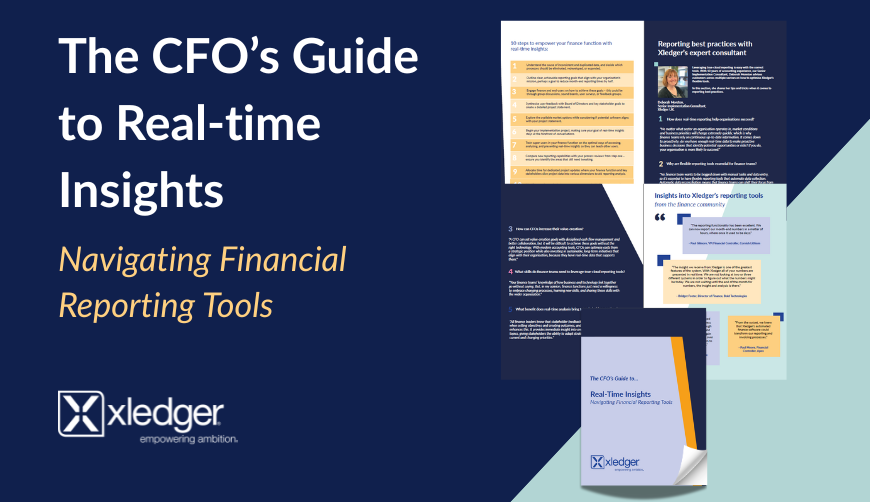
The CFO’s Guide to Real-time Insights
Download our guide to discover:
The challenges that modern CFOs may face while operating without real-time insights.
Reporting best practices with Xledger’s expert consultant.
How well you utilise your current reporting tools.
Get in touch
Have any questions on Xledger’s finance software?
Get in touch with one of our dedicated team.
Contact person