Norway
 Sweden
 Finland
 United Kingdom
 Denmark
 United States
Data is important in any business, and nowhere is this truer than in the housing sector. But managing data can be difficult when dealing with confusing supplier lock-in strategies that offer little information about new support and contract renewals. Here’s a checklist to help housing associations handle data migration projects with ease.

Before starting a data migration project, it’s worth asking yourself: “Can I cleanly break my data?” For example, housing associations that choose to migrate at year-end have the freedom to cleanly break their data, starting the new financial year on a new system with a completely new dataset. Importantly, data migration projects demand a lot of resources, time, and expertise to be successful. So how can housing associations ensure they have the right tools and minds on the task?
Get in touch to discuss how Xledger supports your finance digital transformation project.
Begin by vetting your data
Housing associations often rely on lean finance teams to manage the finances of the entire organisation. To manage an already significant workload and data migration project, preparation is crucial. Housing association finance teams can begin by vetting the quality of their data. Consider the following questions:
- How much data do you have to move from your current system into your cloud system?
- Where is your data stored?
- Can you access your data?
- What is the quality of your data?
After you’ve defined your data quality, location, and volume, you’ll have a clearer picture of how to extract the data and the steps to succeed. Here’s a practical checklist that housing associations can use when planning and executing their data migration project.
Data migration confidence checklist for housing associations
Use this checklist to help you reduce risk and plan your data migration project with confidence.
- Data audit & discovery
- We have identified all data required for migration (finance, tenants, assets, repairs)
- We know where all relevant data is stored
- All required data sources are accessible
- Data volumes have been assessed
- Data issues (duplicates, gaps, inconsistencies) have been identified
- Data quality and cleansing
- Data has been validated for accuracy and completeness
- Duplicate and obsolete records have been removed
- Key data fields are standardised (e.g. dates, addresses, balances)
- Only relevant data is included for migration
- Clear ownership of data cleansing has been assigned
- Migration scope & strategy
- The scope of migration is clearly defined
- A migration approach has been agreed (e.g. year-end cutover)
- Historical vs. active data requirements are confirmed
- Licensing and right-to-use constraints are understood
- A contingency plan is in place
- Ownership & governance
- Data owners are assigned across key areas
- Stakeholders are aligned on data structure and definitions
- Roles and responsibilities are clearly defined
- Governance and approval processes are established
- Compliance and security requirements are documented
The following two steps are typically completed during your data migration project, supported by your vendor and their in-house project managers.
- Testing & validation
- Test migrations are planned and scheduled
- Data mapping is documented and approved
- Validation criteria are defined (e.g. balances, record counts)
- End users are involved in testing
- Issues are tracked and resolved before go-live
- Resources & readiness
- Internal resources are allocated and accountable
- External expertise is engaged where required
- Timelines are realistic and agreed upon
- User training is planned
- Go-live support is in place
Lean on your software vendor
Every housing association will have different data requirements. Use this checklist as a starting point, then tailor it to your organisation. Your vendors will provide a wide network of experts to support the project, making it easier for you to migrate high-quality data from a legacy platform to a modern system.
Book your free demo with our accountancy-trained solution consultants and learn how Xledger can support your data migration and finance implementation.
Frequently Asked Questions
The length of each data migration project depends on a few factors, including the complexity of an organisation, the quality of existing data, and the amount of data that needs to migrate. It’s best to factor in extra time to your project timeline to alleviate any delays.
Many organisations choose to migrate only active or recent data while retaining older information in an offline archive. We suggest that the majority of our customers migrate no more than seven years of historical data when moving to the cloud.
Poor data quality is one of the most common risks in a data migration project. Inaccurate, duplicated, or incomplete data can create reporting issues and reduce confidence in the new system. Conducting a thorough data audit and cleansing exercise before migration helps minimise these risks and supports a smoother implementation.

Customer story
Apex Housing
Apex Housing Association (Apex) provides and maintains more than 7,000 high-quality homes and provides support to almost 18,000 tenants and residents across Northern Ireland. Since 1965, they have provided support services, associated care, and accessible high-quality housing to their community.

Webinar
The Xledger Podcast: Housing Associations Part 1
In the podcast we will explore:
- How to approach the crucial first steps of your implementation journey
- What to avoid when choosing a new finance management system
- Non-negotiable factors to consider when selecting a new finance software provider
Guide
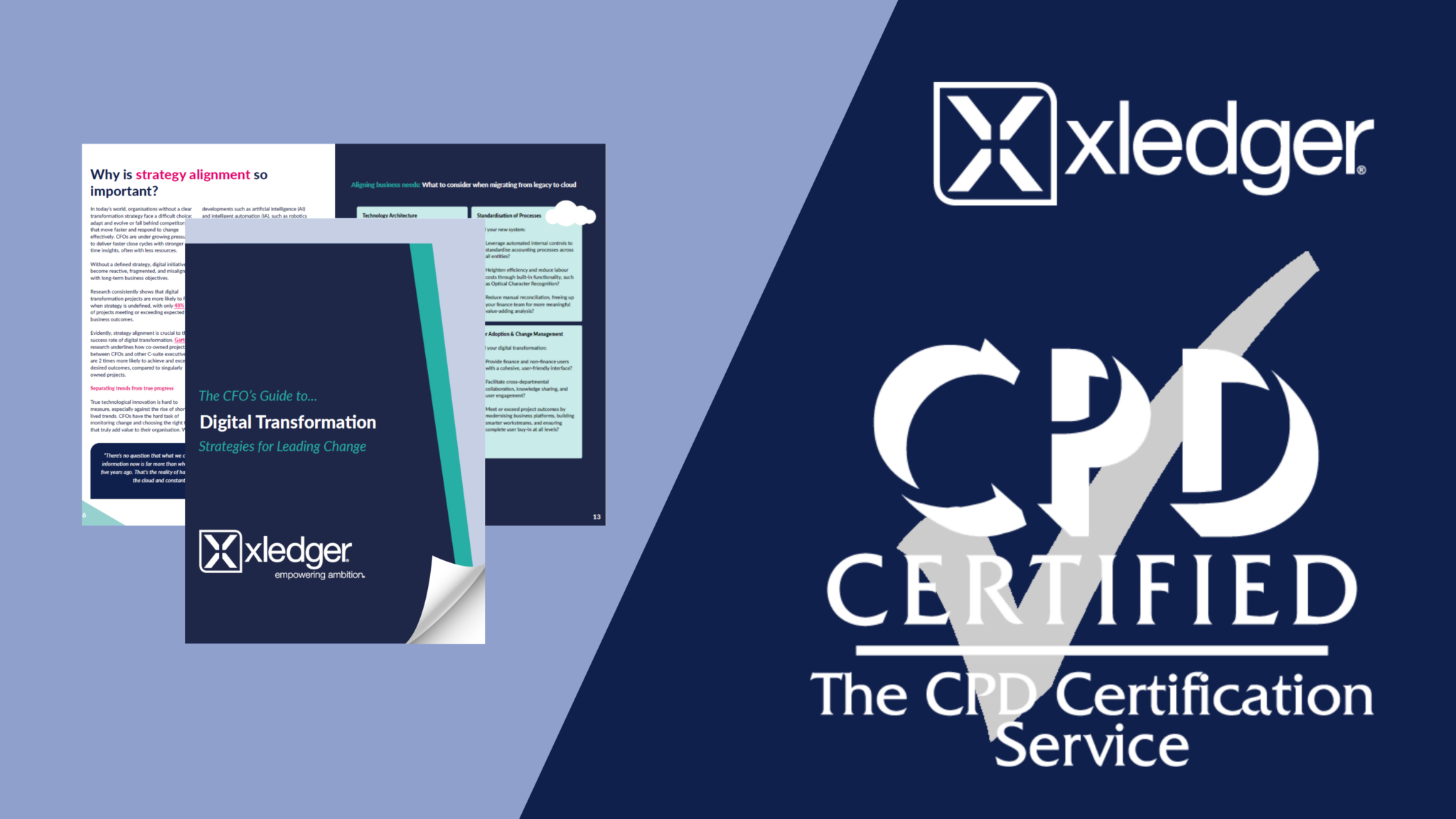
The CFO’s Guide to Digital Transformation
Welcome to Xledger’s CPD-Certified guide.
Our guide unpacks the risks of digital stagnation and offers key performance indicators (KPIs) that CFOs can use when measuring transformation success. Featuring expert insights, you’ll discover the steps to scoping a new finance system and critical questions to ask when aligning finance and wider business needs.
Complete the learning to receive:
- CPD certificate
- Accompanying learning materials
Get in touch
Have any questions on Xledger’s finance software?
Get in touch with one of our dedicated team.
Contact person