Norway
 Sweden
 Finland
 United Kingdom
 Denmark
 United States
Charity finance leaders face new regulations as the updated Statement of Recommended Practice (SORP) for Charities evolves. Xledger UK CEO Peter Hucker joined panellists from Cancer Research, Charity Finance, and BDO to discuss how to navigate the new Charity SORP.

Richard Bray (Finance Regulatory & Tax Manager, Cancer Research), Fiona Condron (National Head of Charities, BDO), and Tristan Blythe (Editor, Charity Finance) sat alongside Peter.
The panellists advised finance leaders, challenged the SORP, and advocated for future clarification to each SORP-making body involved, namely the Financial Reporting Council, the Charity Commission for England and Wales and the Commission for Northern Ireland.
A quick overview of the SORP 2026 changes
With accounting periods commencing in January 2026, charities must navigate the financial reporting standard and understand its impact on their audit, governance, and reporting requirements. The SORP should now align more with FRS 102, affecting how charities prepare their trustees’ annual reports.
So, what’s actually changed in the SORP? The three main changes are as follows:
- Updated tier reporting framework
- Changes to lease accounting
- Revised audit thresholds
The updated tier reporting framework sat at the heart of the panel’s discussion, with the panel unanimously welcoming the change. However, it was noted that Tier 2 spans a very wide range of organisations due to its large income threshold, which could potentially place disproportionate reporting burdens on mid-sized charities in the UK.
The tier structure can be broken down into the following three thresholds:
- Tier 1: Charities with gross income up to £500,000
- Tier 2: Charities with income between £500,000 and £15 million
- Tier 3: Charities with income above £15 million
The new charities SORP also lists changes to lease accounting. The panel highlighted that charities with multiple lease arrangements, such as offices, shops, or community buildings, may find this change complex. The main challenge here is that leases must be recognised on the balance sheet, a change that speaks directly to the ever-growing auditing and regulatory scrutiny that charities face.
The third main change is the revised audit thresholds. The revisions state that the independent examiner threshold increases to £500,000, and the audit threshold increases to £1.5 million. However, these changes primarily apply in England and Wales, with key differences for charities that fall under the Scottish Charity Regulator and the Charity Commission for Northern Ireland.
As these thresholds are assessed annually, rather than over multiple years, the panel advised charities approaching these thresholds to monitor income carefully to avoid any regulatory non-compliant reporting.

Charities SORP Webinar
Tristan Blythe, Editor at Charity Finance, leads the panel consisting of Richard Bray, Finance Regulatory and Taxes Manager at Cancer Research UK, Fiona Condron, National Head of Charities at BDO, and Peter Hucker, CEO at Xledger UK. The panel explores:
- What the new Charities SORP means in practice.
- Where charities should direct their efforts.
- How finance teams can navigate the changes with confidence, while keeping reporting clear and manageable for finance teams.

Practical insights from the panel: How can charities ease the reporting burden?
When asked about the biggest improvements in the new Charity SORP, the speakers each shared a few key insights on how charities can ease the new reporting burden. We’ve listed their top pieces of advice below.
“The tiering structure predominantly impacts the trustees’ report”
Fiona reassured the audience that, although the changes may seem daunting, it’s important to remember that “the tiering predominantly impacts the trustees’ report, rather than the notes on the account themselves.” Keeping this in mind can reassure charities that the added burden is narrative reporting, instead of technical accounting, and can help teams direct their efforts where it matters most.
Sharing this sentiment, Richard added that the improvements around natural classification of costs, the narrative on reserves, and legacy income all work to ease the accounting and reporting burden by charities.
“But,” he elaborated, “My concern is that some of the fundamental issues facing charity accounting haven’t really been addressed. That includes the complexities coming from new lease accounting, income recognition, and the fundamental issue of producing a document [SORP guidelines] that smaller charities can use, as well as larger charities.”
Observe larger charities to see what good looks like
Peter suggested that smaller charities should try to implement Environmental, Social, and Governance (ESG) objectives at a board level, much like larger organisations. This way, “smaller charities avoid completing ESG as a tick-box exercise” and can create meaningful ESG data that drives change.
Adding to this, Fiona suggested, “Looking at what larger charities have already been doing, and how they’ve approached it, is always a good place to start in terms of what good looks like.” Smaller charities can benchmark themselves against larger charities to gain a clear view of the reporting requirements in the next tier.
Richard wrapped up the discussion, urging charities to prepare as soon as possible, “Time will go very quickly, so even if your year-end isn’t until December, it’s worth preparing now.”
Responding to the new SORP with confidence
Investing in the right financial infrastructure will help charities to respond confidently to the new SORP. Book your free demo with Xledger to discover how to navigate the additional reporting burden while maintaining transparency for stakeholders.

Customer story
Trussell
We met with the Finance Operations Manager in the spring of 2022 to understand what they thought of their experience with Xledger and the value it has added to their organisation. Trussell is a national charity that exists so we can all be free of hunger.

Article
Staying Compliant: What is ESG and Why Do We Need It?
ESG is a corporate sustainability concept that identifies a company’s impact on the environment and society. It’s fast becoming a major buzzword in accounting and finance circles as it aims to capture a business’s measures on climate, diversity, equality, and inclusion.
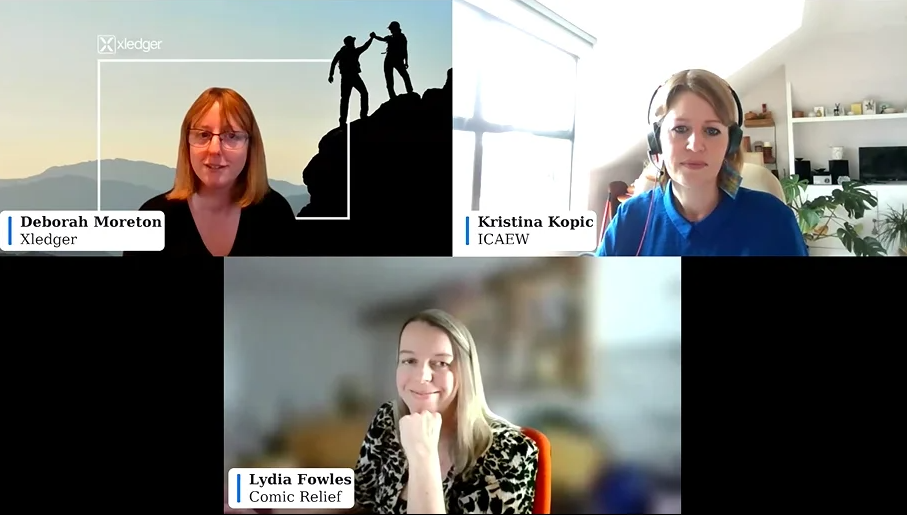
Webinar
How to Successfully Deliver Digital Finance Transformation for Your Charity with Comic Relief
This webinar covers:
- The critical issues Comic Relief aimed to address and rectify when scoping and implementing a new finance system
- The benefits of a financial digital transformation for the organisation
- An exclusive look into Xledger’s finance software and how it works for the not-for-profit sector
Get in touch
Have any questions on Xledger’s finance software?
Get in touch with one of our dedicated team.
Contact person