 Norway
 Sweden
 Finland
 United Kingdom
 Denmark
 United States
The Autumn Budget 2026 presents UK businesses with a mixed financial picture of upcoming legislation changes. Economic growth is forecast to slow to 1.0% in 2027, while inflation is expected to peak at 3.8% in Q1 2027 before returning to the 2% target by Q3 2028.

The Chancellor of the Exchequer, John Healey, delivered the UK Autumn Budget on 28 October 2026. Alongside measures to help businesses with growing energy costs, the government is building measures designed to encourage investment, accelerate digitalisation, and reduce administrative burdens for mid-market organisations.
For business owners, finance leaders and accounting professionals in the property, education, housing, financial services, venues and hospitality sectors, four Autumn Budget business rate changes stand out.
Contact us to learn how Xledger can support you in adapting to the Autumn Budget 2026 changes.
1. E-invoicing is firmly on the agenda
One of the most significant longer-term changes is the introduction of mandatory VAT e-invoicing from financial years beginning on or after 1 April 2029.
His Majesty’s Revenue and Customs (HMRC) has confirmed that Peppol will form the UK’s core interoperability framework. The reforms aim to make the day-to-day e-invoicing process simpler, reduce errors, and support greater automation efforts across small businesses to large organisations.
The deadline gives finance teams that rely heavily on PDF invoices, manual data entry, and disconnected approval processes a chance to assess their readiness. Mid-market organisations that find they have inconsistent supplier data or difficulty meeting invoicing standards should consider how their processes will need to evolve.
The change also sits within the government’s wider goal of reducing administrative burdens on business, with up to £640m per year identified in potential gross administrative savings. This total includes up to £290m from reforms intended to create a more realistic company-reporting framework.
For finance teams, reducing unnecessary administration will help them prepare for more digitalisation in the near future, a key factor in the success of the Chancellor’s wider ambition of “drawing a line on the costs holding business back.”
2. Real-time forecasting is crucial when combating rising employment costs
From 1 April 2027, the National Living Wage will increase by 3.9% to £13.21 per hour. Combined with the wider economic outlook, this gives labour-intensive organisations another variable to consider when budgeting and forecasting.
Although the effect will be different across industries, venues, hospitality, nurseries, education and other people-focused organisations may be impacted more directly. Finance teams in these sectors should question how quickly the changes can be reflected in budgets and longer-term forecasts.
“A change in employment costs can influence cash flow, operating margins, investment decisions and the assumptions behind longer-term plans. Finance teams need to understand those knock-on effects early and model how different scenarios could play out. That gives leadership greater confidence to decide where costs can be absorbed, where plans may need to change, and where investment can continue.”
Ovi Stici, Sales Director
Xledger
When economic assumptions such as these change, access to real-time financial information gives leaders more opportunity to respond before pressures are fully legislated.
3. Investment and targeted relief create different opportunities across sectors
The Budget offers targeted support rather than a uniform settlement for UK organisations.
The housing sector will receive an additional £1.5bn for the Social and Affordable Homes Programme (SAHP), while other government investment will be directed through the National Wealth Fund and British Business Bank, including funding that aims to unlock strategic commercial sites.
Hospitality and venues face a different picture, however. From April 2027, qualifying retail, hospitality, and leisure properties will benefit from higher small business rates relief thresholds, while social clubs, pubs, and live music venues will receive additional support, taking total relief to 35%.
Hospitality and venues face a different picture, however. From April 2027, qualifying retail, hospitality, and leisure properties in England will benefit from an increased small business rates relief, supporting high street businesses with the cost of their premises. Social clubs, pubs, and live music venues will also receive additional support, taking total relief to 35%.
The Chancellor positioned the broader investment agenda around long-term growth, stating that, “from the startups of today, to the scale-ups of tomorrow, to the billion-pound companies of the 2030s, [he] wants to see them succeed and stay in Britain.”
For finance leaders looking to expand operations through acquisitions or development programmes, finance teams will play an important part in translating these opportunities into sustainable business plans. Visibility across project costs, cash flow, commitments, and group-wide performance is key to making these moves successful as legislation complexity grows.
4. Digital readiness remains the foundation for future technology
The Budget also places significant emphasis on digital technology and AI, including an additional £120m for the AI Security Institute and £35m to establish GovAI, giving civil servants access to frontier AI tools to cut administration costs.
As the Chancellor put it: “This is how Britain leads on AI – secure, safe and working for the British people.”
For finance functions, however, effective digitalisation hinges on reliable financial data, and it’s clear that bringing financial, operational, and other organisational data together is critical for AI-readiness.
“Without a single source of truth, reporting becomes harder to control, insights can become siloed, and the risk of errors grows with manual intervention.”
Ivan Blythe, Solutions Consultant
Xledger
Only when information is connected and accessible can mid-market business leaders build the foundations for their organisations to undertake the next stage of digital transformation, such as AI adoption.
Preparing finance for what comes next
The Autumn Budget does not provide one universal outlook for UK organisations. Different sectors will experience its measures in different ways.
What it does provide is a clear set of planning considerations for finance leaders: prepare for mandatory e-invoicing, model the effects of changing costs, assess new investment carefully and ensure the organisation has reliable financial information supporting its decisions.
For CFOs and finance teams, the months ahead therefore present an opportunity to look beyond the immediate Budget headlines and consider whether existing processes, data and systems provide the visibility required to respond confidently as conditions change.
Key takeaways from Healey’s Autumn Budget 2026:
- The Government will introduce mandatory VAT e-invoicing from April 2029, with an implementation roadmap to be published.
- The OBR forecasts growth to slow to 1.0% in 2027 as higher energy prices feed through to consumers and businesses.
- Inflation is forecast to peak at 3.8% in Q1 2027 before returning to the 2% target by Q3 2028.
- The Government has identified up to an estimated £640 million per annum of new gross administrative savings for business, including through a more proportionate company reporting framework.
- The Government will increase the National Living Wage by 3.9% to £13.21 per hour from 1 April 2027.
For organisations whose financial year runs from 1 April 2026 to 31 March 2027, the immediate task is to review current forecasts and distinguish measures affecting this year from those taking effect in later periods.
Get in touch with us to understand how Xledger can support your organisation in the face of growing regulatory pressure.
Get in touch
Have any questions on Xledger’s finance software?
Get in touch with one of our dedicated team.
Contact person


Article
Autumn Budget 2025: What do Finance Teams Need to Know?
In her Autumn Budget announcement on 26th November, the Chancellor, Rachel Reeves, announced the UK government would freeze income thresholds for a further three years, alongside a pick-and-mix of levies to help increase headroom. In this article, we examine the impact of tax increases on mid-market businesses.
Webinar
The CFO Reality Check – Accountex Manchester
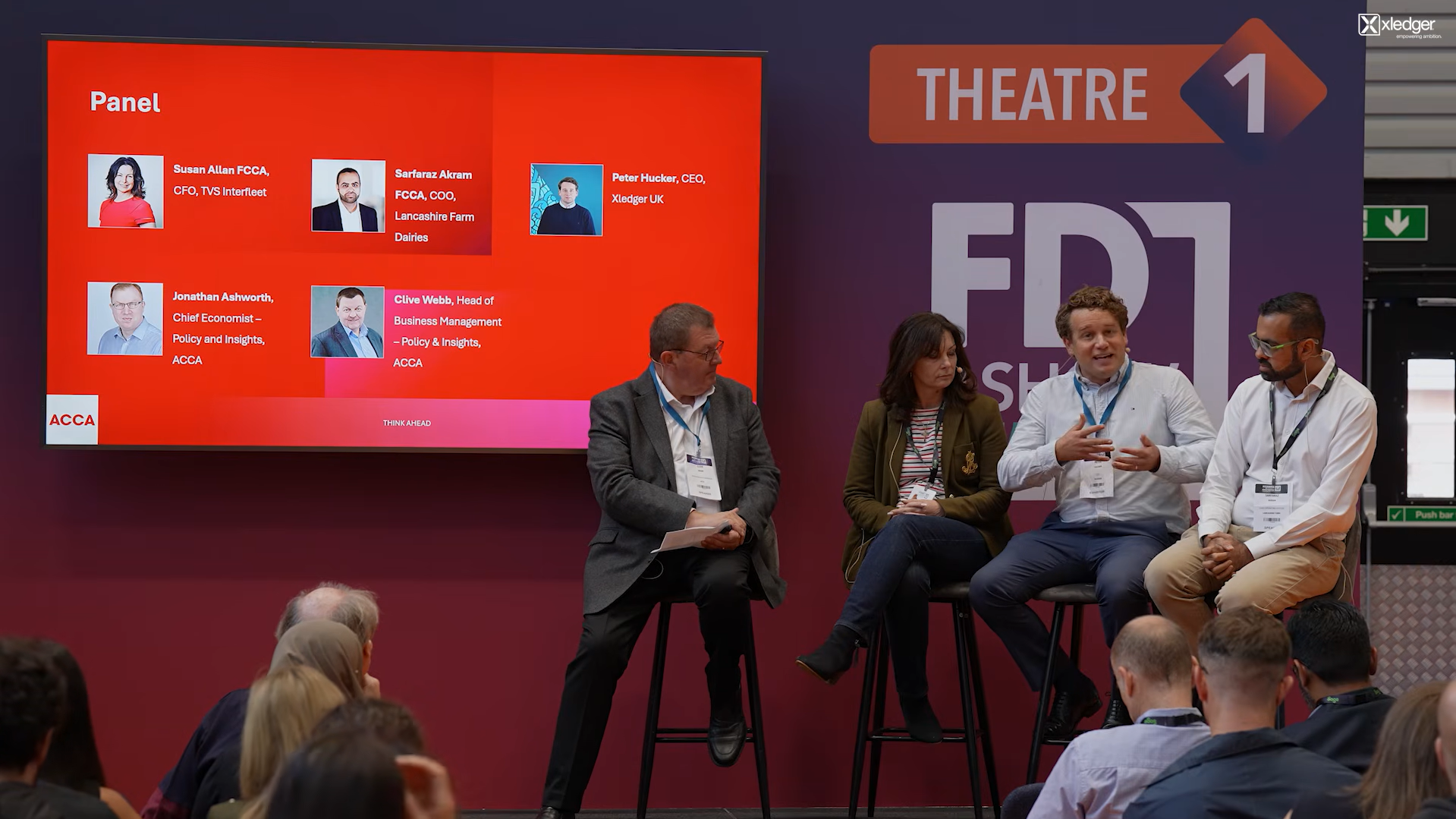
At Accountex Summit Manchester FD Show 2026, Xledger CEO Peter Hucker joined ACCA’s panel of finance leaders to discuss how CFOs are navigating growth, investment, costs, and risk in an increasingly uncertain economic environment.
The discussion covered key topics including:
- How economic uncertainty is shaping board-level decision-making and strategic priorities.
- The practical challenges finance leaders are facing when advising on growth, resilience, and long-term planning.
- Real-world perspectives from CFOs and Finance Directors on navigating today’s rapidly changing business environment.

Webinar
The Xledger Podcast: Scoping and Implementing a Finance System Part 1
Welcome to the Xledger Podcast, a CPD-Certified series focusing on all sectors.
In part one of this two-part series, our team of experts from Xledger explore the scoping and implementation of a new finance system featuring Tim Wright (Operations Director), Zheng Zeng (Consulting & Support Manager), Ana Rodrigues (Project Manager), and Robb Webb (Senior Business Development Manager). Learn about their insights and experiences from working on finance transformation projects.
Complete the learning to receive:
- CPD certificate
- Transcript
- Accompanying learning materials